Cocoa's Black schools, 1891 to 1968: from a lodge hall to the Rosenwald school on Blake Avenue
Cocoa's Black children were in school by 1891, in a lodge hall west of the tracks. In 1923 the community, the county and the Julius Rosenwald Fund built Cocoa Junior High School, Florida's oldest surviving Rosenwald school. It became Monroe High in 1947; Monroe closed with integration in 1968.
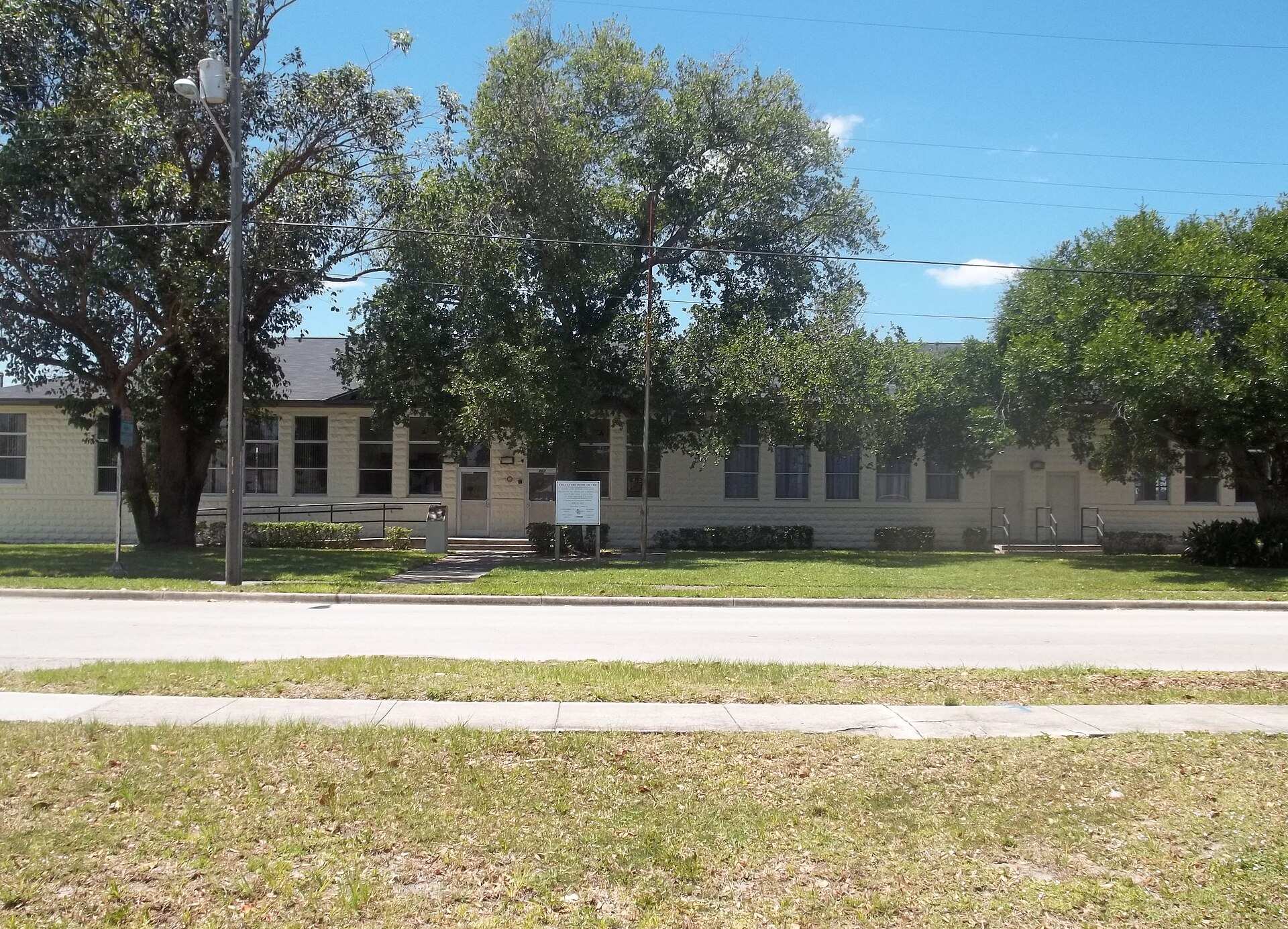
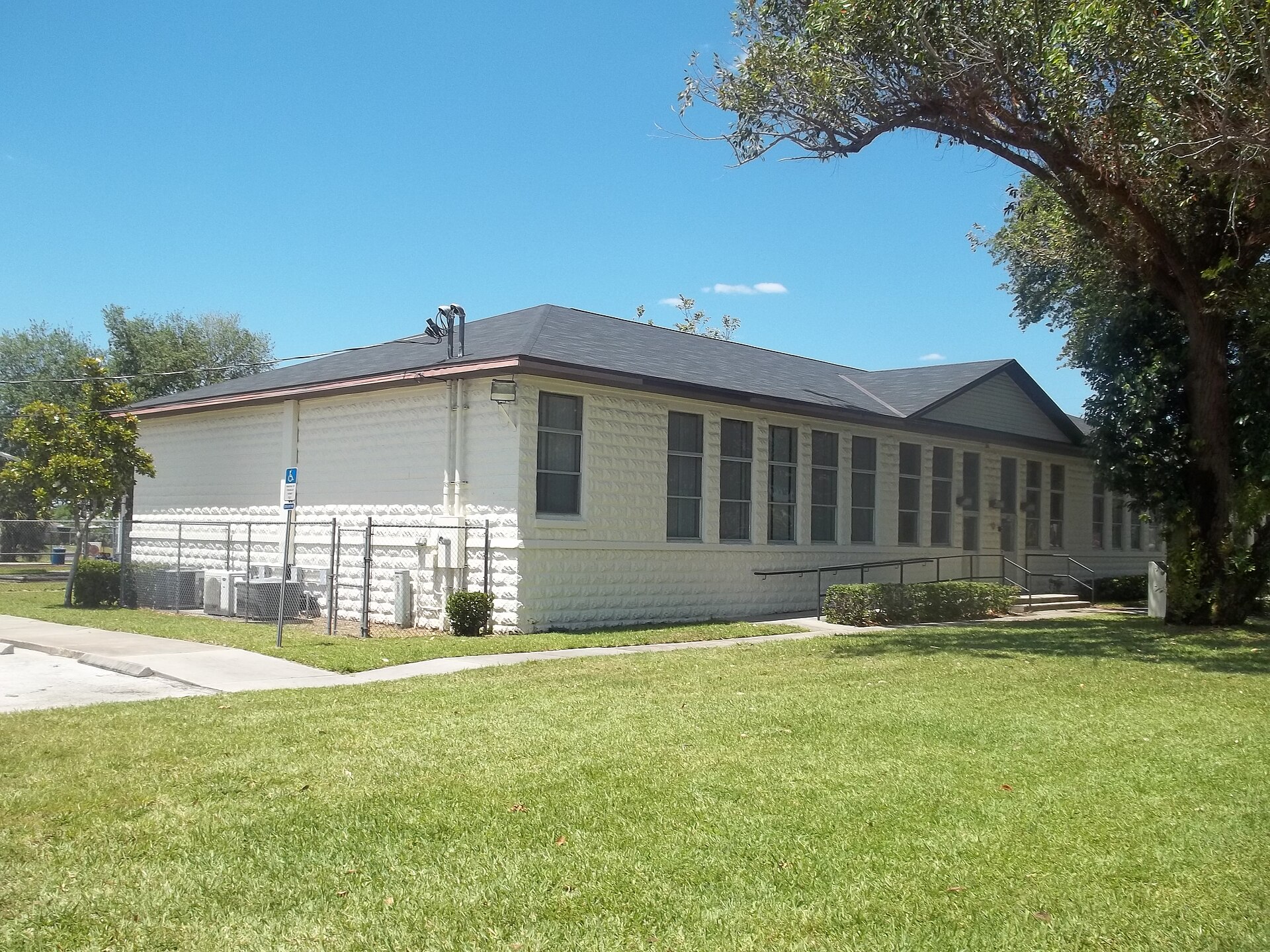
Cocoa’s most important school building is a one-story schoolhouse of rusticated concrete block at 307 Blake Avenue. It opened in 1923 as the town’s school for Black children, built with plans and money from the Julius Rosenwald Fund, and its 2019 National Register nomination calls it “the oldest remaining Rosenwald School in the State of Florida” and the only one left in Brevard County.
Before 1923
A school for Black children existed in Cocoa at least as early as 1891, the nomination says. Its first classes, according to a history kept by Monroe High alumni, met in the old Knights of Pythias hall on the west side of the railroad tracks on Magnolia Street, with Peter Wright as principal. In 1900, when the county school board consolidated two white schools, it gave the Black school the building the white children had left; the Black community raised $150 toward it, and the school got the white schools’ second-hand furniture. A 1919 Sanborn fire-insurance map shows a two-story “Negro School” on Willard Street, a few blocks west of the railroad.
The Rosenwald school
The push for a real school came from Cocoa’s Black residents. On December 15, 1921, the Cocoa Tribune congratulated the “negro section of Cocoa” on getting plans for a new school. The plans, and part of the money, came from the fund that Julius Rosenwald, the president of Sears, Roebuck and Company, set up to build schools for Black children across the South. The fund required local matching money: according to the nomination, the public put in $5,164, Black residents gave between $168.78 and $368 by different accounts, mostly from the wages of grove, packing-house and domestic workers, and a white winter resident, the New York banker Henry White Cannon, gave $1,500 toward construction and $1,465 to furnish the building.
The school followed the Rosenwald Fund’s Floor Plan No. 4, a four-teacher community school, with long rows of windows for daylight, cloakrooms, blackboards on three walls of each classroom, new desks instead of benches, and an auditorium with movable partitions so the building could serve as a community hall. It was finished in late 1923, and two more classrooms were added by 1930. The nomination quotes a state school report of 1928-30 calling Florida officials’ slow use of the Rosenwald money “lethargic.”
Inside the school
The school was crowded from the start. By 1946 it enrolled 318 students in grades one through ten, with first and second grades split into morning and afternoon groups, and double sessions continued in Cocoa’s Black schools until Poinsett Elementary opened in 1959. Under the county’s pay practices, the nomination says, its teachers earned about half what teachers at Cocoa’s white schools did.
One of them was Harry T. Moore. He was hired in 1925 as the school’s fourth-grade teacher at $480 for an eight-month term. The nomination says he stayed two years before becoming principal of the Titusville Colored School; the county school records quoted in the state’s 2006 report list him at Cocoa in 1925-1926 and as principal in Titusville from 1927. His friend John E. Gilbert joined the faculty and later became principal, and on May 24, 1938, Gilbert put his name on the first suit in Florida to equalize Black and white teachers’ pay, a petition in the Brevard circuit court. The courts ruled against him, and he lost his job; the nomination dates his firing to 1939, after the case was lost, while the state’s 2006 report on Moore says he was dismissed shortly after the suit was filed. The story is on Old Space Coast’s Black history page.
Monroe High and integration
In 1947, under principal B. A. Morse, grades eleven and twelve were added and the school was renamed Monroe High School, for Jessie Ruth Monroe, a longtime teacher and former principal. Until then Black students in Cocoa had to leave town to finish high school. Monroe held its first graduation in 1948, for six students. In 1954 Monroe moved to a new building, and in 1968, as Brevard’s schools integrated, it closed and its students went to the formerly all-white Cocoa High School.
The old building was renamed the Harry T. Moore Center when it stopped being a school in 1954. It stood empty until the 1980s, when it passed to the Brevard County Housing Authority.
Further Reading
- Before His Time: The Untold Story of Harry T. Moore by Ben Green
- Florida: A Short History by Michael Gannon
Sources
- National Park Service, National Register Registration Form: Cocoa Junior High School (Florida's Historic Black Public Schools MPS), 2019
- Office of the Attorney General of Florida and FDLE, Case Summary: the bombing of the Harry T. Moore residence (2006)
- Gilbert v. Highfill, 139 Fla. 444, 190 So. 813 (Fla. 1939), CourtListener
As an Amazon Associate we earn from qualifying purchases.