What 'Old Cocoa' means
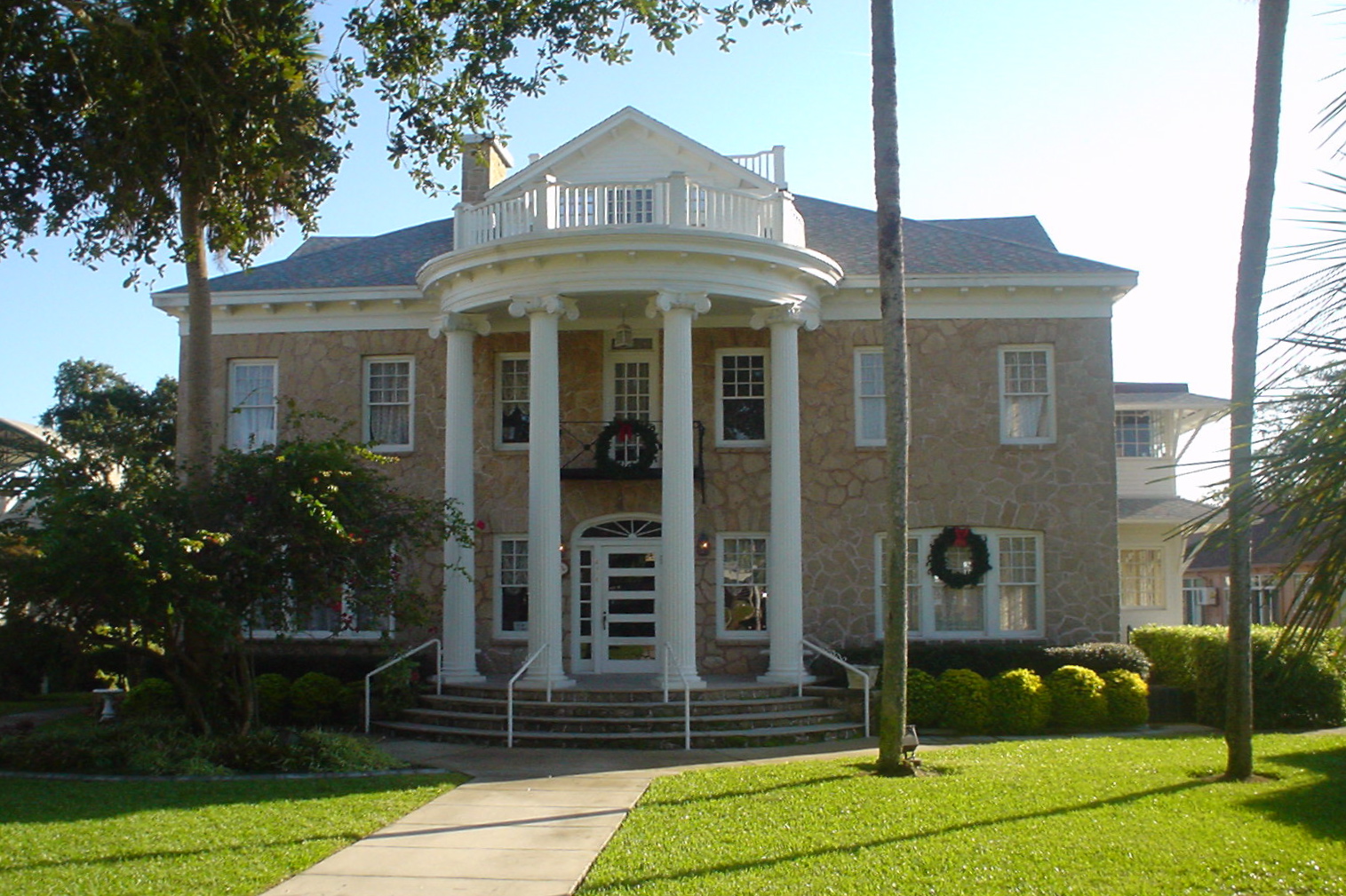
A note on the editorial premise of this site. We cover mainland Cocoa, not Cocoa Beach. The citrus era, the Porcher House, S.F. Travis Hardware, the Indian River Drive years, the long arc from 1860s settlement to the Space Age. Primary sources only. No travel-blog filler.

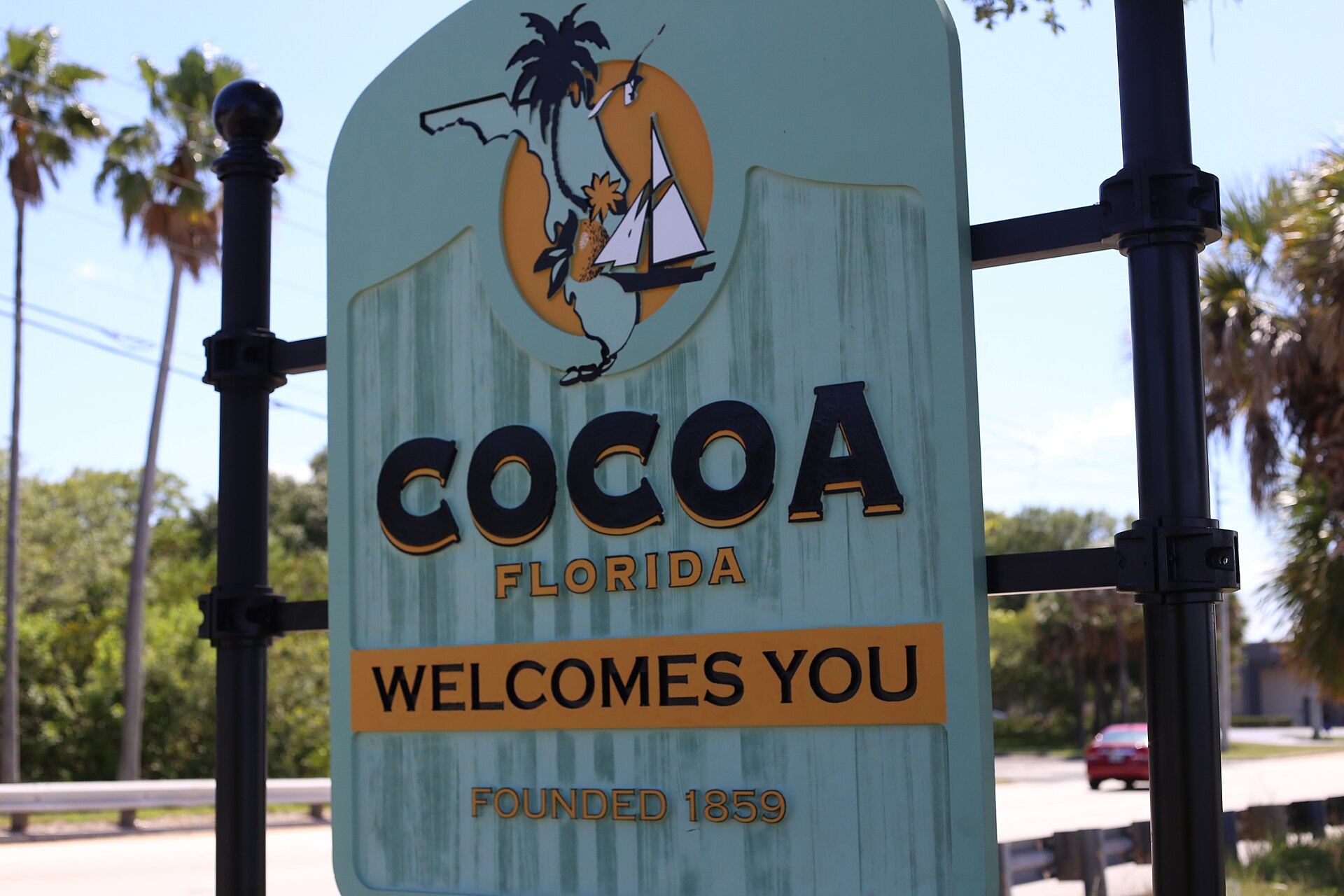
“Old Cocoa” is the mainland city of Cocoa, Florida, the city on the western edge of the Indian River Lagoon, settled in the 1860s, incorporated in 1882, west of the bridge to Merritt Island. It’s not Cocoa Beach. Cocoa Beach is a separate city on the barrier island east of the lagoon, incorporated in 1925, with its own history that gets its own treatment elsewhere.
The distinction matters. Generations of confused tourists, real-estate listings, and even some published histories have run “Cocoa” and “Cocoa Beach” together as if they’re the same town. They’re not. They’re not even the same era. Mainland Cocoa was a working citrus-shipping city forty years before the barrier island had a road on it. The buildings of Cocoa Village, the Porcher House, S.F. Travis Hardware, the Aladdin Theatre, predate everything on the beach side.

What this site doesn’t do
We don’t publish travel-blog content. There is no list of “10 things to do in Cocoa Village this weekend.” There is no “best restaurants” listicle. There is no “what to pack for your Cocoa visit.” If you want that, the City of Cocoa’s tourism page and dozens of travel sites will serve you better.
We don’t publish hagiography. Cocoa’s history is mixed. The citrus economy was built on labor that was poorly paid and racially segregated. The 1968 school integration came late and incompletely. The land-boom and hurricane cycles cost specific people specific fortunes. We tell what happened. We don’t smooth it for the chamber of commerce.
The geographic boundary
Old Cocoa stays on the mainland. Our beat:
- North: Roughly to where Cocoa city limits meet north-Brevard rural land.
- South: To the Eyster Boulevard line where Cocoa meets Rockledge. We cover the Cocoa side directly; Rockledge gets contextual treatment when its history overlaps.
- East: The Indian River Lagoon. We write about the lagoon’s role in Cocoa’s history. We don’t write about Cocoa Beach or Merritt Island as their own subjects.
- West: Out to where the city’s grove and suburban development ends, before reaching the St. Johns River drainage.
That’s a small geographic area. It contains 165 years of recorded history and several thousand documented residents across the decades. There’s enough material to keep us writing for a long time without straying outside the boundary.

Why mainland Cocoa is worth a dedicated site
Most published Florida history concentrates on Miami, St. Augustine, Tampa, and Key West, with rotating attention to Jacksonville and Pensacola. Mainland Brevard County, and specifically the citrus-era cities of Cocoa, Rockledge, Eau Gallie, and Melbourne, gets covered, when at all, as a precursor to the NASA-era story. The story tends to be: “Brevard was a sleepy citrus county before Cape Canaveral made it famous.”
That treatment misses what mainland Cocoa actually was. Between 1880 and 1960, Cocoa was a substantial commercial city in the context of pre-NASA Florida. It had a significant citrus economy, a stable Black community whose institutions are still operating, a Victorian-era downtown that survived 20th-century urban renewal, and a civic culture that produced the political will to preserve what’s preserved today.
The NASA story is real and important. It’s also covered extensively elsewhere, at Kennedy Space Center’s own publications, at the Air Force Space Museum, at the Astronaut Hall of Fame, in dozens of histories of the space program. The mainland-Cocoa story is less well-covered, and the documentary record is thinner in publicly-available form.
This site is for the mainland-Cocoa story.
What’s next
The initial set of articles covers the principal subjects: the 1860s founding, the Porcher House, S.F. Travis Hardware, the Indian River Drive era, the citrus packing house economy, the 1894-95 freeze, Edward Porcher, the 1925 land bust, the Aladdin Theatre, the historic district, the schools, the Black community history, Cocoa High football, the Rockledge relationship, Brevard Community College, the mosquito-control district, the Cuban community, Hurricane David, the newspapers, and the 1980s revival.
Subjects we plan to add: the Banana River Naval Air Station / Patrick Air Force Base period (1942-present, as it intersected with mainland Cocoa); specific grove-family histories beyond the Porchers; the rise of Cocoa-area healthcare (Cape Canaveral Hospital and its predecessors); the post-2000 commercial and residential development patterns. The list is open.
If you have primary-source material on Cocoa history, family papers, photographs, business records, oral-history recordings, that should be in our citations, we’d like to hear about it. Corrections to existing articles are welcome through the contact page, and we log every correction in the article’s modified-date field.
That’s the premise. Read what’s already published. Pick the article that fits what you came for. The Sources block at the bottom of every piece is where the actual research lives.