The Porcher House, 1916: Cocoa's coquina mansion and what it cost to build it
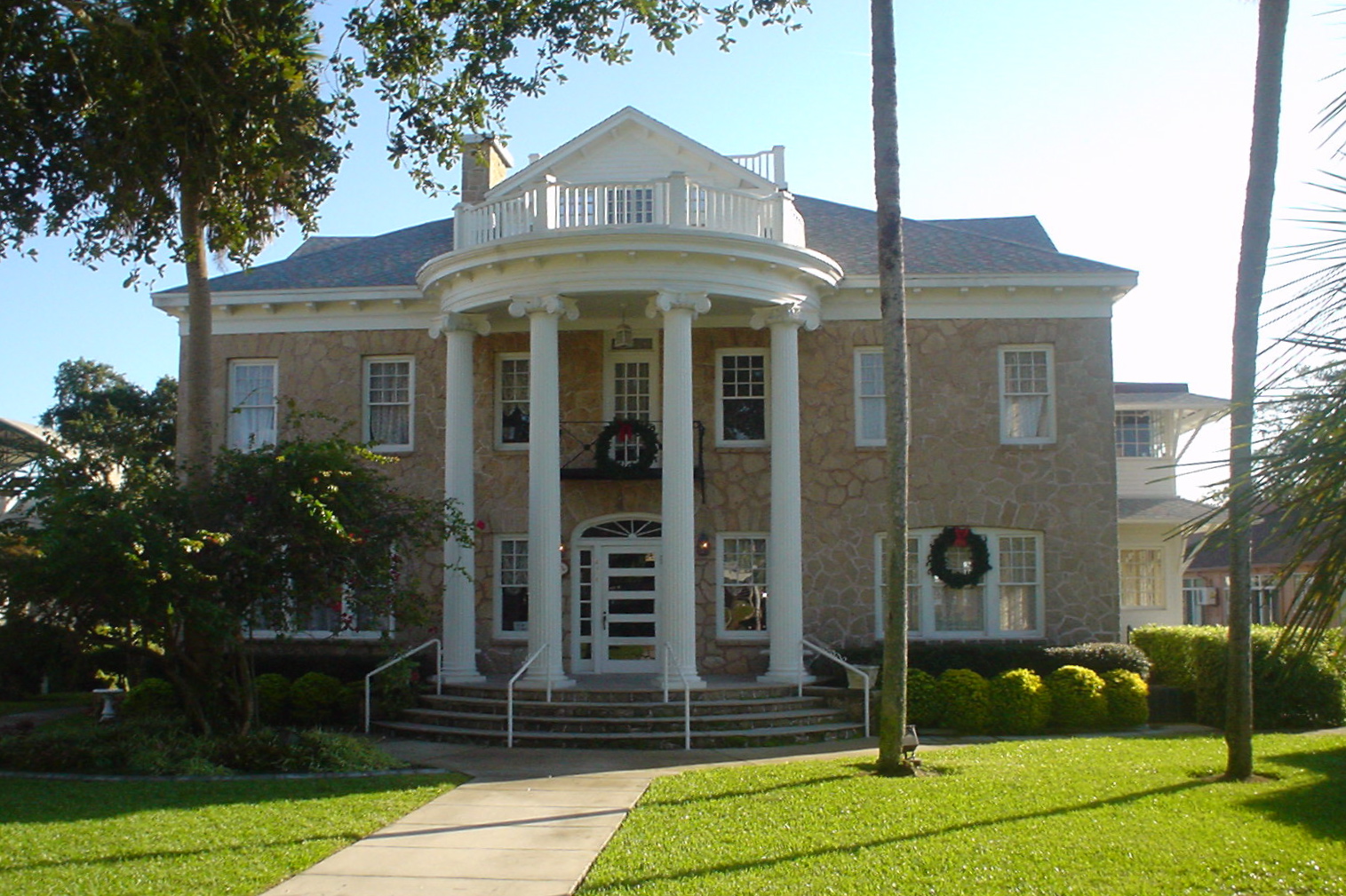
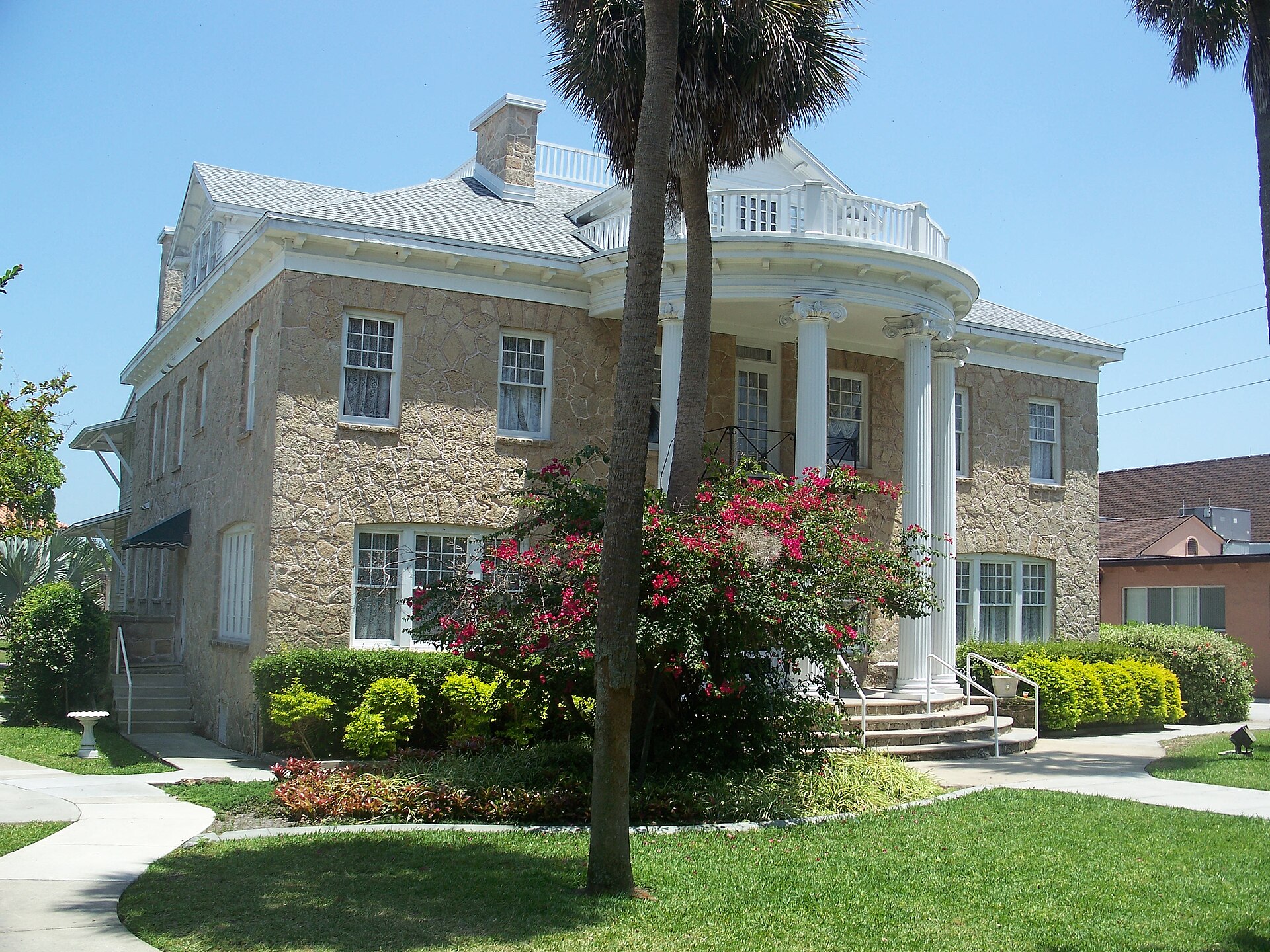
Edward Porcher's 1916 coquina-block mansion at 434 Delannoy Avenue is Cocoa's most photographed building. It's also a complete document of what a citrus magnate could spend before the 1925 land bust.

The Porcher House is a Classical Revival mansion at 434 Delannoy Avenue in Cocoa, completed in 1916 for citrus magnate Edward Postell Porcher and his wife Byrnina Peck Porcher. It’s built of locally quarried coquina, a soft shellstone the masons cut from the Anastasia Formation outcrops along the Atlantic. The house listed on the National Register of Historic Places in 1986, the City of Cocoa bought it in 2000, and today it functions as a municipal event venue. None of which gets at the real story. The real story is that the Porcher House is what citrus money looked like in Cocoa right before the 1925 land bust ended the era.
Edward Porcher arrived in Cocoa in 1881 from Charleston, South Carolina, sixteen years old, an orphan, dropped off with relatives. By 1916 he ran the largest citrus operation between Daytona and Fort Pierce. The house is what he built when he stopped reinvesting every dollar back into groves.

The building, in specifics
- Address: 434 Delannoy Avenue, Cocoa, FL 32922.
- Built: 1916. Architect: J.A. Wood of New York and Cocoa (also responsible for several FEC Railway hotels on the East Coast).
- Construction: Coquina-block exterior walls roughly 14 inches thick, quarried at St. Augustine and barged south. Interior: heart pine, cypress, and oak.
- Square footage: Approximately 8,000 ft² across two stories plus a finished attic.
- Original cost: Approximately $35,000 in 1916 dollars (roughly $1.1 million in 2026 dollars by CPI). Documented in the Cocoa Tribune coverage of the construction.
- NRHP listing: Added to the National Register of Historic Places on June 5, 1986. Reference number 86001246.
- Current owner: City of Cocoa, since 2000.
The coquina is the architectural signature. Coquina was the building stone of Spanish colonial Florida, the Castillo de San Marcos in St. Augustine is the famous example, and by 1916 it was already an unfashionable, expensive way to build a house. Most Florida boom-era mansions of the period were stucco-over-frame or, after 1920, hollow tile. Porcher’s choice to build in coquina was a statement about permanence. He’d watched the 1894–95 freeze kill most of north Florida’s citrus and most of his neighbors’ fortunes; he wanted a house that wouldn’t be touched by the next disaster.

Who Edward Porcher was
Born 1865, Charleston, South Carolina. Orphaned by the end of Reconstruction. Migrated to Brevard County in 1881 at sixteen to live with the Magruder family on a Cocoa orange grove. By the 1890s he’d bought his own grove, then several more. In 1893 he co-founded the Indian River and Lake Worth Pineapple Growers Association, Florida pineapples were a brief, lucrative crop on the lagoon before the freeze and the Hawaiian competition ended the run.
By 1910 Porcher’s holdings included groves in Cocoa, Rockledge, Eau Gallie, and Fort Pierce, and he sat on the board of the Indian River Citrus Exchange. By 1916, when he commissioned the house, his estimated net worth was around $500,000 (roughly $15 million in 2026 dollars).
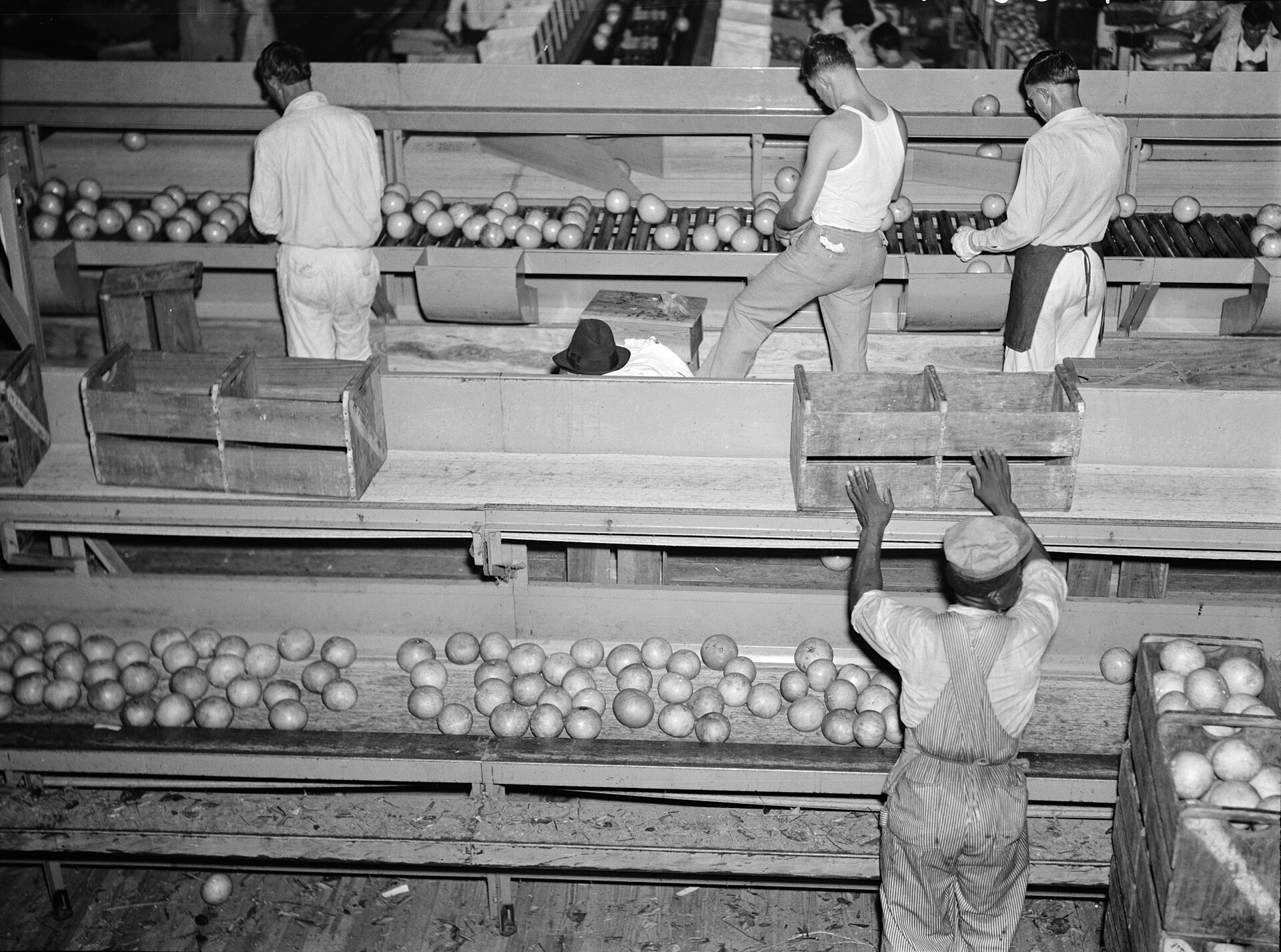
He had a particular reputation for shipping discipline. While most of his neighbors were grading their own fruit on porch tables and shipping in whatever crates they had, Porcher had standardized grades, branded crates, and a contract with the Florida East Coast Railway for guaranteed reefer-car (refrigerated rail car) allocations. His “Deer Park” brand was a known label on northern markets, New York, Philadelphia, Chicago.
What happened to it
Porcher died in 1937, age 71, in the Cocoa house. Byrnina Porcher continued to live there until her own death in 1958, by which point the house was the only Porcher-family asset that mattered. The citrus business had been sold off through the 1940s, dissolved into the post-war Florida Citrus Mutual cooperative system.
After Byrnina’s death the house passed through three private owners, two of whom converted parts of the ground floor into commercial space, a tea room in the 1960s, a real-estate office in the 1980s. The city bought it in 2000 with grant support from the Florida Department of State Division of Historical Resources.
Restoration ran from 2000 through 2003. The original heart-pine floors survived, as did most of the millwork. The coquina exterior was cleaned with low-pressure water (high-pressure would have eroded the soft stone) and a few replacement blocks were quarried and matched. Today the house functions as a municipal event rental and is open for occasional public tours during Cocoa Village events.
Why it matters more than the postcard
Every Florida town has a Victorian mansion someone built when they got rich. Most of them were torn down in the 1960s. The Porcher House survived because of three things: coquina construction that didn’t decay the way wood frame did, a single family that owned it for 42 years uninterrupted, and a city government in 2000 that had the political will to buy a deteriorating building instead of letting it become a condo site.
If you want to understand what Cocoa was before NASA, before Patrick Air Force Base, before Cocoa Beach was Cocoa Beach, the Porcher House is the document. It’s a citrus packing house’s profits, in coquina, sitting on a 1.2-acre lot in what is now downtown Cocoa, still standing 110 years after it was finished.
Sources
- National Register of Historic Places, registration form for Porcher House, NRHP reference 86001246, listed June 5, 1986. Available via the National Park Service NRHP database.
- City of Cocoa, “Porcher House” historic property page, verified May 2026.
- Florida Master Site File, Florida Division of Historical Resources, Porcher House record.
- Cocoa Tribune, construction coverage, 1915–1916 (microfilm via Brevard County Library System).
- Florida Historical Society, Florida Historical Quarterly, biographical material on E.P. Porcher.
- U.S. Census, 1880, 1900, 1910, 1920, 1930, Porcher household records via Ancestry / National Archives.
- Florida East Coast Railway annual reports, 1900–1925, reefer-car allocations to Brevard shippers.
- Florida Citrus Mutual archives on Indian River District shipping brands, 1900–1945.