Edward Porcher: orphan from Charleston who built Cocoa's biggest citrus empire

Edward Postell Porcher arrived in Cocoa from Charleston at sixteen, an orphan, and built the largest citrus shipping operation between Daytona and Fort Pierce by the 1910s. The Porcher House is what he left behind.

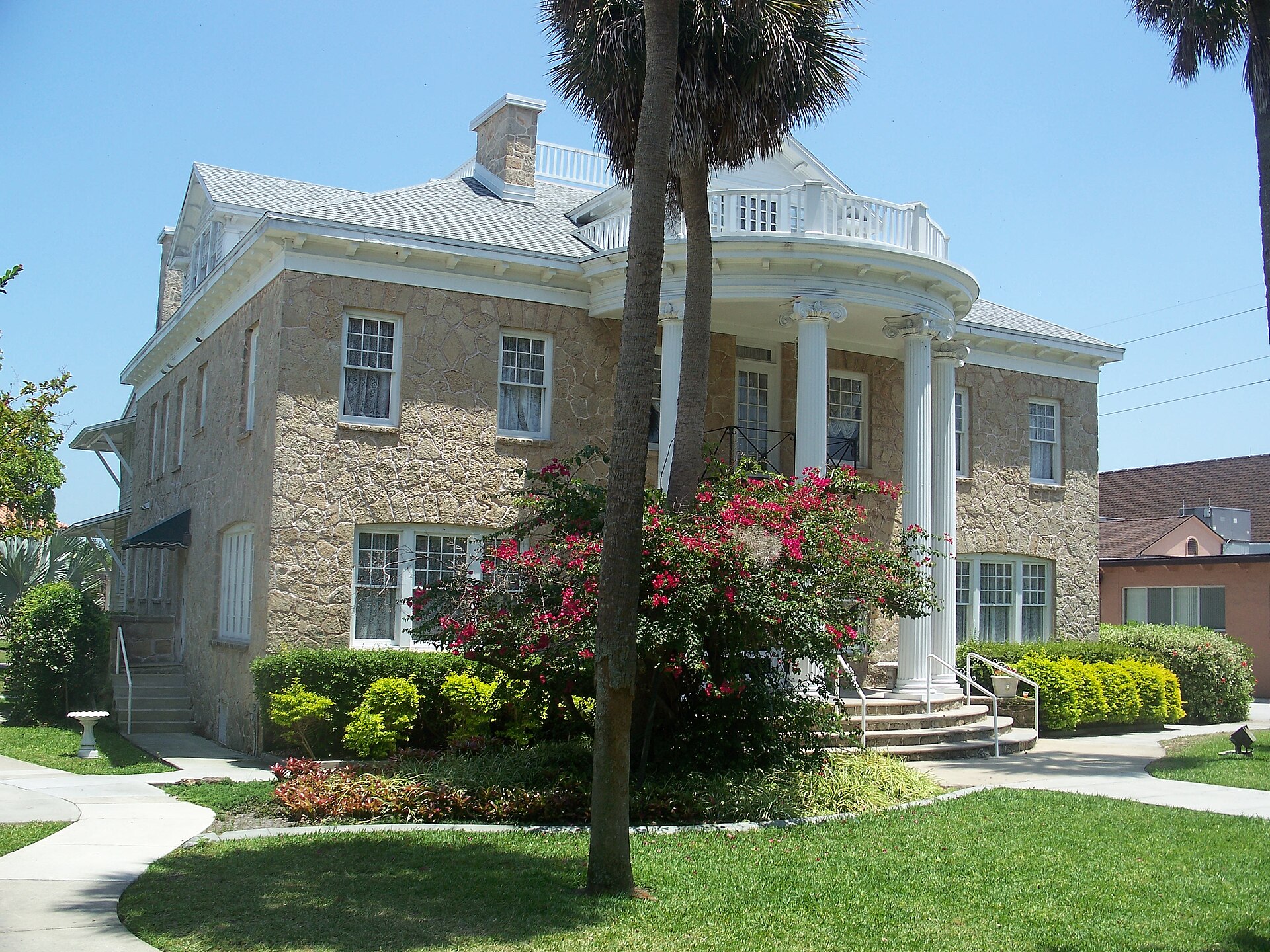
The Porcher House in Cocoa, Florida, the 1916 mansion built by Edward Porcher with profits from the largest citrus shipping operation in Brevard County.
The Porcher House (1916). Edward Porcher built it with citrus money, lived there until his 1937 death. Photo via Wikimedia Commons

Edward Postell Porcher arrived in Cocoa in 1881 at age sixteen, an orphan from Charleston, South Carolina, sent south to live with the Magruder family. By the time he died in 1937, he had built the largest citrus shipping operation between Daytona Beach and Fort Pierce, served on the board of the Indian River Citrus Exchange, and constructed the coquina mansion at 434 Delannoy Avenue that still bears his name. The Porcher House is the visible legacy. The less visible legacy is the citrus shipping infrastructure that supported Cocoa’s economy for two generations.

Porcher matters in Cocoa history not because he was unusual but because he was representative. The Indian River citrus barons of 1890–1930 were a recognizable type: Northern or Carolinian transplants, often arriving young, building grove operations through aggressive land acquisition, leveraging the Florida East Coast Railway and the Indian River brand premium. Porcher just did it more thoroughly than most.

Charleston origins, Florida arrival

Edward Postell Porcher was born December 15, 1865, in Charleston, South Carolina, to Frederick Augustus Porcher and Sarah Postell Porcher. The Porchers were a long-established Charleston Huguenot-descended family; Frederick had been a professor of history and ancient languages at the College of Charleston before the Civil War. The war ruined the family economically, like most Charleston households of their class, they emerged from Reconstruction with status but no money.

Both parents died while Edward was a child. By 1881 he was a sixteen-year-old orphan with no inheritance, and family connections to the Magruder family in newly-settled Brevard County provided a destination. He arrived in Cocoa in 1881 and lived with the Magruders on their orange grove west of town for several years, learning the citrus business as a working hand.

By 1888 Porcher had bought his own grove, ten acres on what is now the Rockledge-Cocoa boundary, financed partly through a family loan from a Charleston relative. By 1893 he had expanded to about 40 acres and was operating his own packing shed.

The 1894-95 freeze and the move south

The 1894-95 Great Freeze hit Florida citrus on December 28, 1894 (the first wave) and again in February 1895 (the second). Most of north-central Florida’s citrus belt was destroyed. The Indian River region, including Cocoa, took serious damage but recovered faster because the lagoon’s thermal mass moderated the temperature drops.

Porcher saw two things in 1895. First, the surviving Indian River groves were going to capture market share from the dead Ocala and Gainesville groves for at least a decade. Second, the freeze risk was real and recurring, and the best response was to diversify south. He began acquiring grove acreage in southern Brevard, Indian River, and St. Lucie counties through the late 1890s.

By 1910 Porcher’s holdings spanned roughly 600 acres of bearing groves across four counties, plus packing facilities in Cocoa, Rockledge, and Fort Pierce. He had married Byrnina Peck in 1890; they had no surviving children.

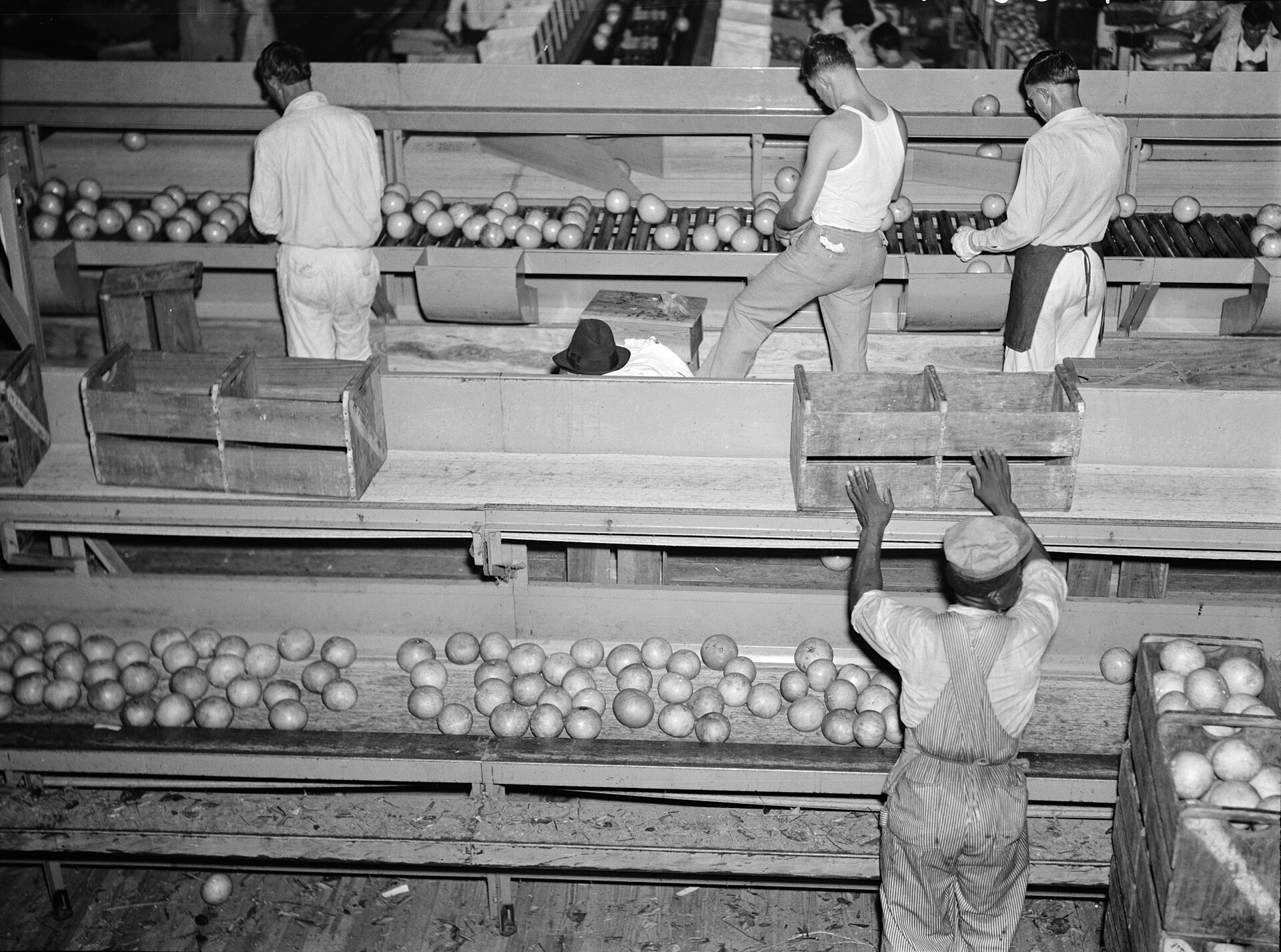
Workers grading citrus at a Fort Pierce packing plant, period photograph.
Citrus grading at a Florida packing plant of the era. Porcher's Deer Park brand sold on the discipline of grading and on FEC reefer-car allocations. Library of Congress FSA/OWI Collection. Public domain.

The “Deer Park” brand and the shipping operation

Porcher’s signature brand was “Deer Park,” named for a corner of his original Cocoa grove that backed up against pine woods. The Deer Park label was a known commodity on northern markets, New York wholesale buyers paid a premium for Deer Park grapefruit specifically, because Porcher’s grading standards were stricter than industry norms.

His shipping innovations:

  • Standardized grades. Porcher graded fruit by size and quality on consistent specifications, rather than the eyeball grading common among smaller shippers. The grade designations were printed on the crate ends, allowing wholesale buyers to order specific grades sight-unseen.
  • Branded crates. “Deer Park” stenciling on the crate end was a marketing device. By 1910 every major citrus shipper had branded crates, but Porcher was an early adopter.
  • Reefer-car contracts. Porcher had standing contracts with the FEC for guaranteed allocations of refrigerated railroad cars during the shipping season. Smaller shippers had to scramble for car space; Porcher’s volume guaranteed his.
  • Direct buyer relationships. Porcher cultivated direct relationships with New York and Philadelphia wholesale produce houses, bypassing the broker layer when he could. By 1915 most Deer Park fruit was sold on consignment to a few specific wholesalers.

The combination meant Porcher captured roughly 80% of the retail price of his fruit, where smaller Brevard shippers typically captured 50–60% after broker fees.

The Indian River brand fight

Porcher was an early and active proponent of the legal protection of the “Indian River” geographic designation. The fight ran through the 1920s as growers in interior Florida (Polk, Lake, Orange counties) began labeling their fruit “Indian River” in northern markets to capture the brand premium.

The Indian River Citrus League, founded in 1931 to formalize the geographic designation, drew on legal groundwork that Porcher and other Indian River shippers had been laying since 1910. The federal court rulings and the eventual USDA “Indian River” designation came after Porcher’s 1937 death, but the framework was his generation’s work.

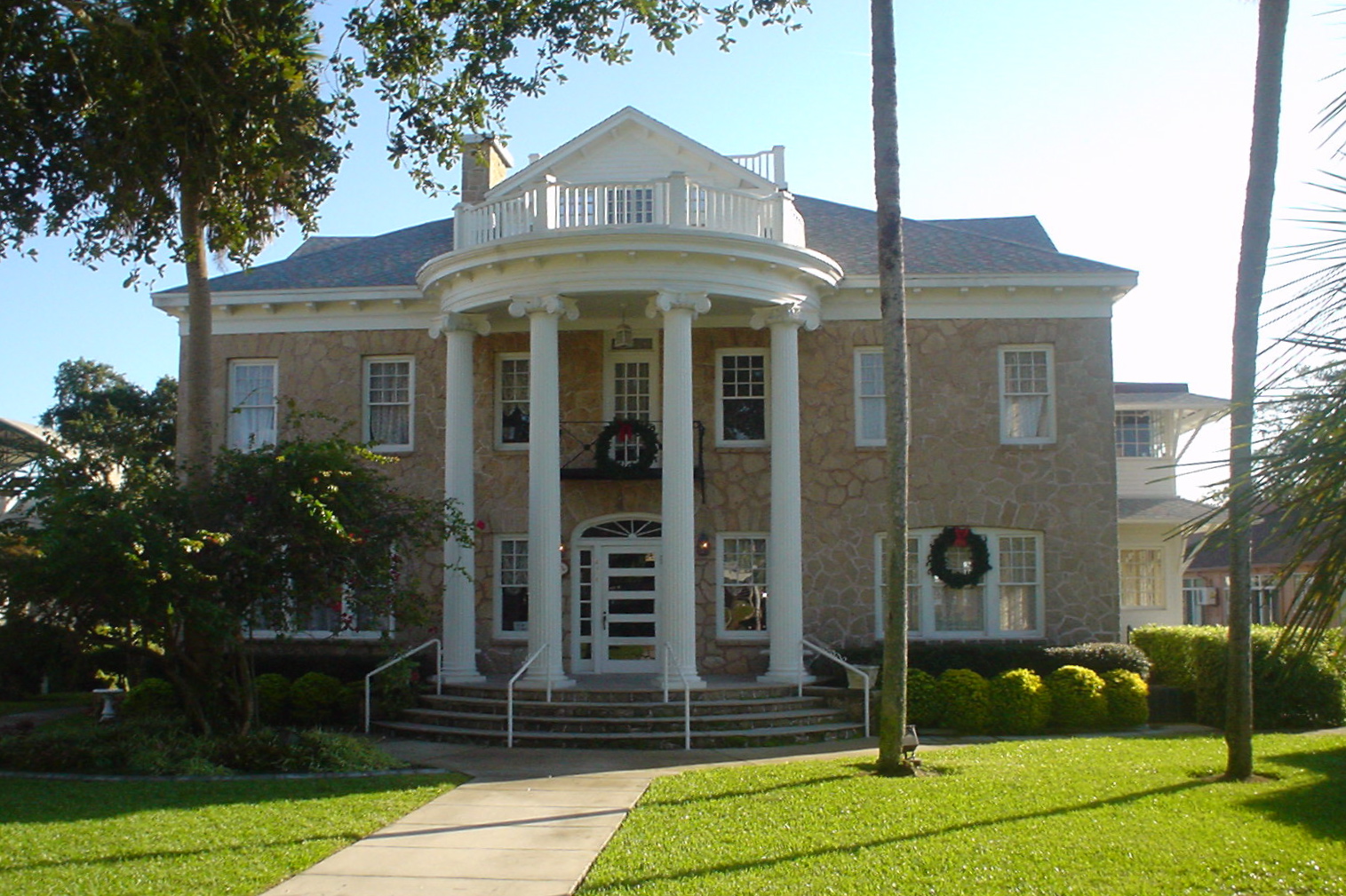
Porcher House detail, Cocoa.
Detail of the 1916 Porcher House. Built in coquina, paid for in citrus money, completed nine years before the 1925 land bust ended the era it represented. Ebyabe via Wikimedia Commons. CC BY-SA 3.0.

The 1916 house

By 1916 Porcher’s estimated net worth was around $500,000 (roughly $15 million in 2026 dollars). The Porcher House, its own piece, was commissioned that year, completed in 1917, and served as the Porchers’ principal residence for the rest of Edward’s life.

The choice to build in coquina was a statement about permanence. Porcher had watched the 1894-95 freeze destroy fortunes. He wanted a structure that wouldn’t be touched by the next disaster, citrus or otherwise.

He didn’t see the next disaster. The 1925 Florida land bust hit speculative real estate but not Porcher’s grove operations directly; the 1929 fruit fly quarantine added cost but didn’t break him; the Great Depression was hard but survivable for a debt-free, diversified operator. Porcher’s last decade was prosperous and quiet. He served on the Indian River Citrus Exchange board, on the Florida Citrus Mutual cooperative’s early board, and on the Brevard County school board.

Death and what followed

Edward Porcher died May 4, 1937, age 71, of complications from pneumonia. He was buried at Pinecrest Cemetery in Cocoa. Byrnina Porcher lived in the Cocoa house until her own death in 1958.

The Porcher citrus operations passed to a series of corporate buyers through the 1940s. The Deer Park brand was eventually consolidated into the Indian River Selectfruit cooperative, then dissolved when that operation closed in the 1970s. By 1985 nothing of the operational Porcher citrus business remained.

The house survived for the reasons covered in its own article: a single family that owned it for 42 years uninterrupted, coquina construction that didn’t decay, and a city government in 2000 with the political will to acquire it.

Of Edward Porcher himself, the surviving record is mostly documents, grove deeds, FEC shipping contracts, Citrus Exchange board minutes, the will. There are a few photographs at the Florida Memory Project. There is no biography. The Porcher House is the principal monument.

Sources

  • U.S. Census records, 1870, 1880 (Charleston), 1900, 1910, 1920, 1930, Porcher household.
  • Florida Historical Society, Florida Historical Quarterly, biographical material on E.P. Porcher.
  • Florida Citrus Mutual archives, early cooperative records 1930s.
  • Indian River Citrus League historical records, founding documents 1931.
  • Florida East Coast Railway annual reports, 1900–1925, reefer-car allocations.
  • Cocoa Tribune, business and obituary coverage of Edward Porcher, 1937 (microfilm).
  • Brevard County Clerk of Court, grove deeds and probate records.
  • Charleston (S.C.) public records, Porcher family birth and death records.
  • College of Charleston archives, Frederick Augustus Porcher faculty records.
  • Florida Memory Project, photographs and ephemera of the Porcher family.