How Cocoa Village got its restaurants: the 1980s downtown revival
By 1980 mainland Cocoa's downtown was in trouble. Vacant storefronts on Brevard Avenue, no foot traffic, the Aladdin Theatre closing. The 1986 NRHP listing, Cocoa Village Mainstreet's marketing push, and a sequence of pioneering restaurants turned the district around by 1995.
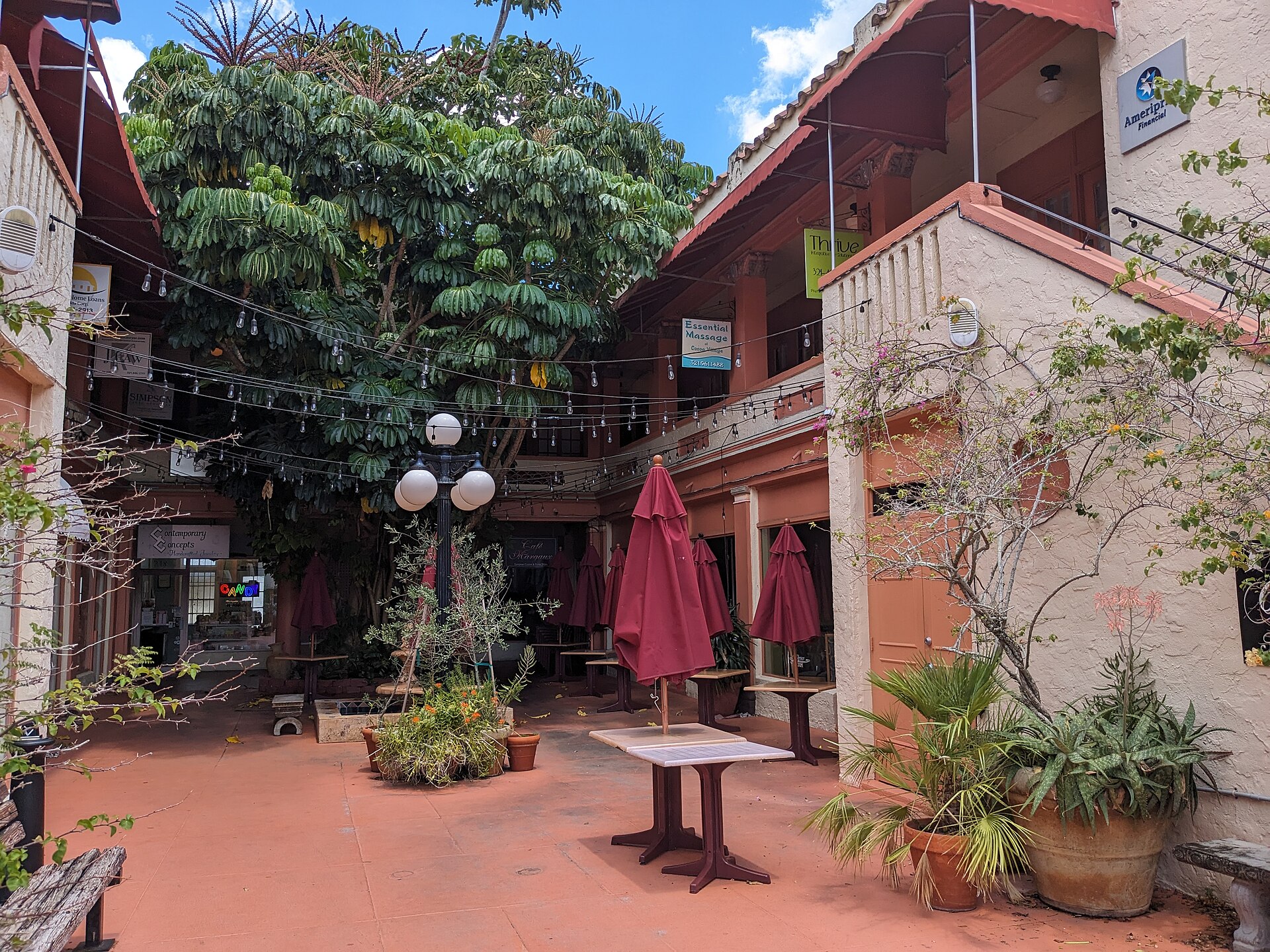
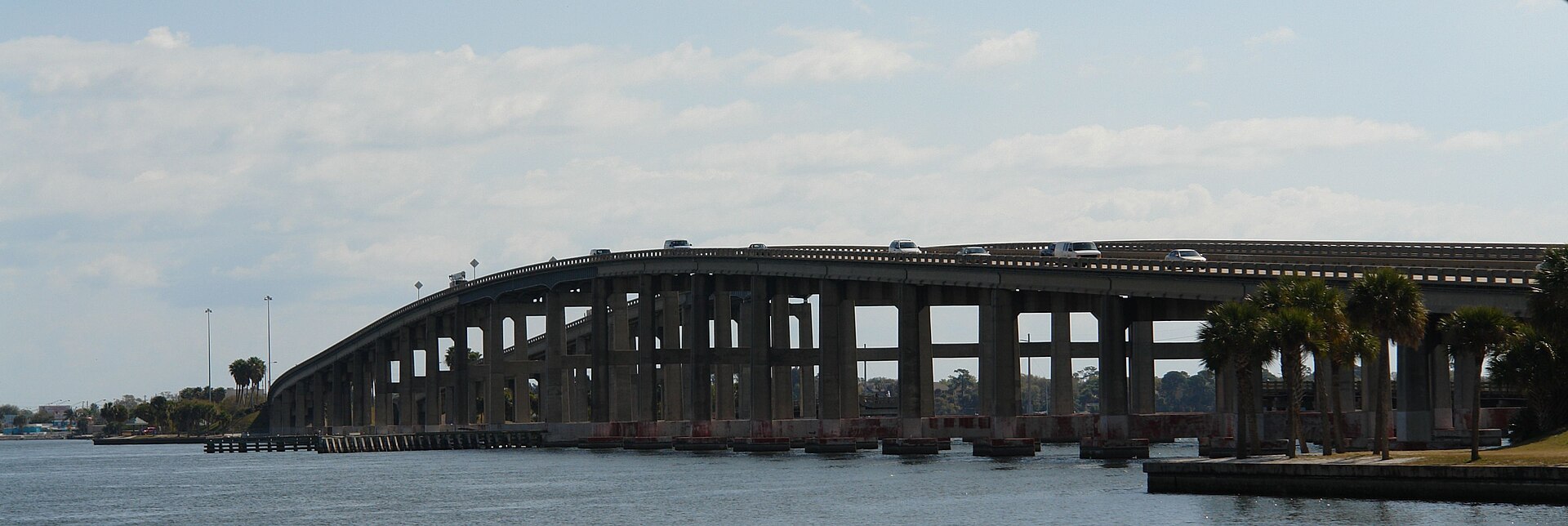
By 1980 Cocoa Village’s downtown was in trouble. The opening of multiplex theaters elsewhere in Brevard had killed the Aladdin Theatre as a first-run cinema (it closed in 1985). The Pineda Causeway had pulled regional traffic away from Cocoa beginning in 1969. Several long-running merchant operations on Brevard Avenue had closed through the 1970s. Vacancy rates on the principal commercial street were approaching 30%. The historic district that the 1986 NRHP listing would eventually protect was still standing, but its commercial economy was failing.
The revival came through a sequence of decisions made between roughly 1975 and 1995: the formation of Cocoa Village Mainstreet as a merchant organization, the 1986 National Register listing, the 1988 local-zoning historic-preservation ordinance, the Riverfront Park improvements of 1985-1992, and, critically, a wave of small restaurants and specialty retailers that opened from 1983 onward. By 1995 the district was economically healthy. By 2005 it was a regional destination.
The 1980s Cocoa Village revival is one of Florida’s better-documented small-town downtown comeback stories.
What the decline looked like
The 1970s decline had specific symptoms:
- Brevard Avenue vacancies. By 1979 at least eight of the principal Brevard Avenue commercial spaces were vacant or in temporary use (church bingo, antique-mall booths, seasonal-only operations). The 1960s and 1970s tenants, appliance stores, clothing retailers, traditional small-town commercial businesses, had migrated to US-1 strip centers or closed.
- Aladdin Theatre in decline. First-run film bookings had collapsed; the theater was running second-run programs and B-films through the late 1970s before ABC Theatres closed it in 1985.
- Restaurant scene minimal. The principal eating options in Cocoa Village in 1980 were a coffee shop, a soda fountain at the Eckerd Drug, and one mid-tier seafood restaurant. Tourist traffic was thin.
- Surrounding context. The opening of Merritt Square Mall in 1972, and the maturation of US-1 strip development through the 1970s, had pulled retail dollars away from the village.
The City of Cocoa’s tax-revenue mix showed the strain. Property taxes on Cocoa Village commercial parcels were producing less than half the inflation-adjusted revenue of 1965. Some merchants were lobbying for property-tax assessment reductions; the city was considering them as a stopgap.
The preservation foundation
The 1970s preservation work in Cocoa Village (its own piece) provided the protection that the revival would need. Without the buildings, the district would have been demolished for surface parking lots and infill construction by 1985, the fate of comparable Brevard commercial historic districts in Titusville and Eau Gallie.
The preservation activists who pushed back against 1970s demolition proposals, including several Travis family members, the Aladdin Theatre operators, and a small group of Brevard Avenue property owners, were the same people who, in the early 1980s, would organize Cocoa Village Mainstreet.
Cocoa Village Mainstreet
Cocoa Village Mainstreet, the merchant-and-property-owner organization that drove the revival, was founded in 1981 (under a slightly different name) and was formalized in 1983. The organization was modeled on the National Trust for Historic Preservation’s Main Street program, which was launched nationally in 1980 to support downtown revitalization in small American cities.
Mainstreet’s principal activities:
- Coordinated marketing. Joint advertising for the village as a destination, rather than individual-store advertising.
- Event programming. Friday Fest, the Spring Art Festival, the Christmas tree lighting, events designed to bring visitors to the village on specific dates.
- Façade improvements. Small grants and design guidance for property owners to improve historic-building appearance.
- Recruitment. Active outreach to specialty retailers and restaurants identifying the village as a potential location.
- Civic advocacy. Lobbying the city for the Riverfront Park improvements, the historic-preservation ordinance, and infrastructure investments.
Mainstreet’s first executive director, Margaret Caudill (also a former city commissioner who had pushed for the 1960s Riverfront Park acquisitions), brought continuity between the civic-preservation work of the 1960s and the commercial-revival work of the 1980s.
The restaurant wave
The 1983-1995 restaurant openings were the principal economic engine of the revival. Several pioneering operators saw what others missed: Cocoa Village’s historic streetscape, modest rents, and lagoon-front public space (the Riverfront Park) made it an attractive food-and-drink venue if the customer-acquisition problem could be solved.
Pioneer restaurants:
- The Black Tulip (opened 1983). Fine-dining French-influenced restaurant on Brevard Avenue. The Black Tulip’s success drew regional attention and demonstrated that the village could support a destination restaurant.
- Café Margaux (opened 1986). Continental cuisine, became a long-running anchor. Closed in the 2010s after a 30-plus-year run.
- The Travis Hardware Soda Fountain (a smaller revival around 1985 of the existing soda fountain at Travis Hardware). Smaller scale but a visible part of the village’s foot-traffic ecosystem.
- Pier 220 (opened in the late 1980s). Lagoon-front seafood, took advantage of the Riverfront Park location.
- Ryan’s Pub (opened 1989). Irish-themed pub, became a Friday-night gathering anchor.
A second wave through 1990-1995 added several Italian, Thai, and casual-dining operators. By 1995 Cocoa Village had perhaps fifteen restaurants in active operation, ranging from coffee shops to fine-dining.
The combination of restaurants, specialty retail (antiques, gift shops, art galleries), and the Riverfront Park events created a self-reinforcing customer base. Visitors came for one purpose (a meal, a festival, an antique-shopping afternoon) and were exposed to the rest of what the village offered.
The Aladdin reopening
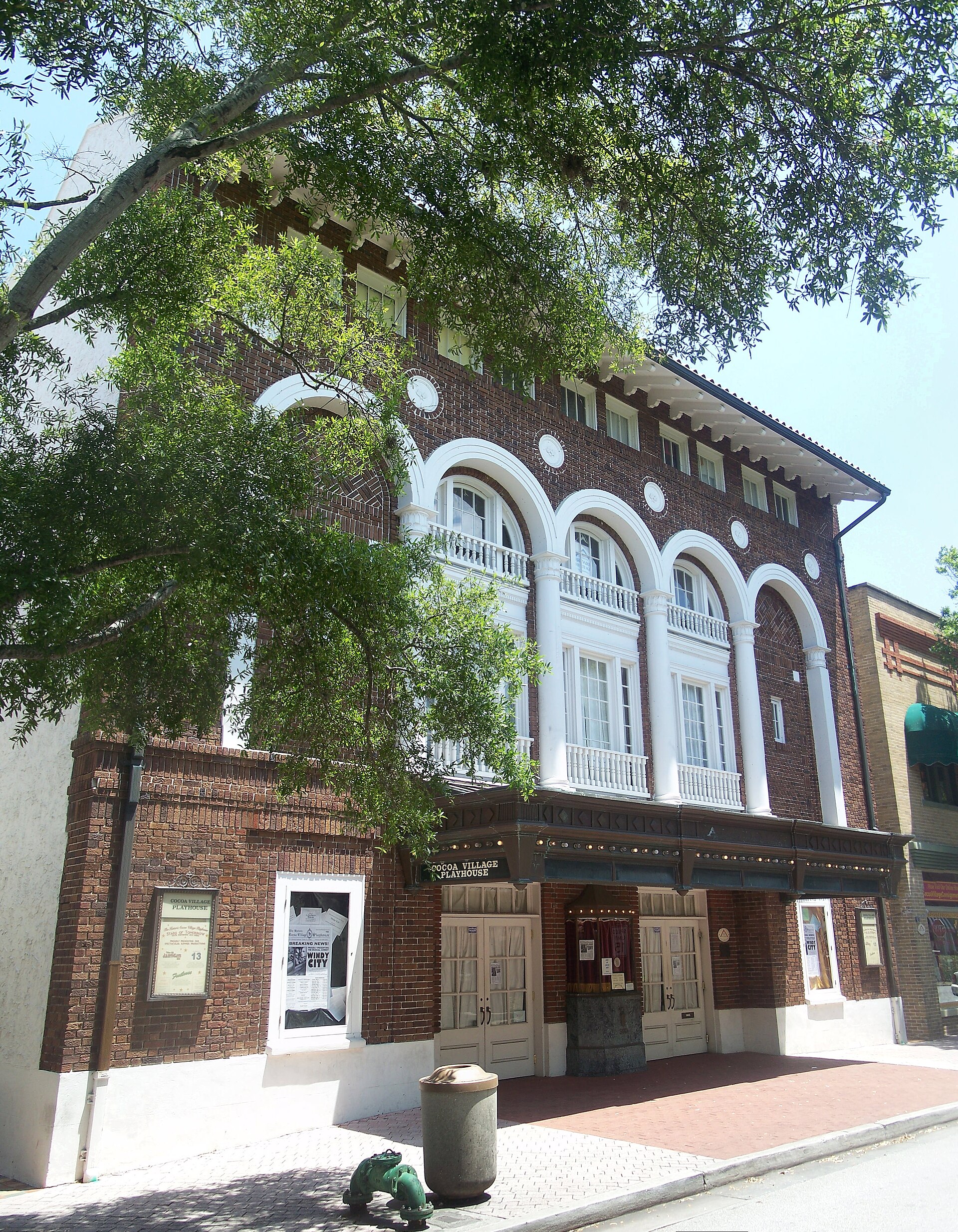
The Aladdin Theatre’s reopening in 1991 as a community-theater venue and second-run cinema was a real milestone. The theater had been dark for six years; its reopening was a visible signal that the village was on a different trajectory than it had been in the 1980s.
The reopening was made possible by the National Register listing (1996; the building was eligible for federal preservation tax credits even before the formal NRHP designation), the City of Cocoa’s acquisition support, and several grants from the Florida Department of State Division of Historical Resources. Local fundraising, much of it through Cocoa Village Mainstreet, supplemented the public-source funding.
The Aladdin’s reopening also reinforced the village’s identity as a cultural destination, not just a commercial one. Theater patrons before and after performances ate at the village restaurants, walked the historic district, shopped the specialty retail.
What it took
Several elements combined to produce the revival:
- Surviving building stock. The 1970s preservation work meant there were buildings to revive in 1983. If the district had been demolished, the revival would not have happened.
- Organized merchants. Cocoa Village Mainstreet provided the coordination and the advocacy infrastructure. Individual merchants couldn’t have produced the revival alone.
- Public infrastructure. The Riverfront Park improvements provided the gathering space for events. City investment in landscaping, lighting, and street improvements made the historic district more appealing.
- Pioneer entrepreneurs. Restaurants like the Black Tulip and Café Margaux took commercial risks in 1983-1986 when the district was still showing 1970s vacancy patterns. Their success de-risked the next wave of entrepreneurs.
- Federal and state support. Preservation tax credits, state grants, NRHP-listing eligibility, all helped finance specific rehabilitation projects.
- Time. The full revival took roughly fifteen years (1981 organizing through 1995 maturation). Downtown revivals can’t be done in two years.
The 2008 crisis
The 2008 financial crisis hit Cocoa Village harder than many Brevard County areas because the restaurant and specialty-retail economy is discretionary spending that drops in recessions. Several long-running businesses closed in 2009-2011, Café Margaux being the most prominent, and vacancy rates briefly increased.
The recovery, when it came, was driven partly by changing consumer preferences (craft brewing, “experience” retail, food-truck and casual-dining concepts) and partly by an influx of second-home owners and small-business operators from out-of-state. The current Cocoa Village commercial mix includes several brewpubs that did not exist before 2010, alongside surviving restaurants and retailers from the 1980s and 1990s wave.
What it tells you
The Cocoa Village revival is a successful small-town downtown comeback. It was not inevitable. Brevard County had several other commercial historic districts (in Titusville, in Eau Gallie) that did not produce comparable revivals and that today retain less of their pre-1970 building stock and less of their commercial vitality.
What made the difference in Cocoa: organized preservation activism starting early, civic investment in the supporting infrastructure (the park, the streets, the building protection), the willingness of pioneer entrepreneurs to commit before it was obvious the revival would work, and roughly fifteen years of sustained effort by the merchant organization.
The revival is a model that other small Florida cities studied through the 1990s and 2000s. Several attempted similar approaches with mixed results. The Cocoa version benefited from specific conditions that don’t fully replicate: the existing building stock, the lagoon-front public asset, the proximity to a substantial regional population (Brevard County), and the unusually committed local activist base.
Further Reading
Sources
- Cocoa Village Mainstreet organization, historical records and minutes, 1981-present.
- City of Cocoa, historic preservation records and economic-development reports, 1980-present.
- Florida Today, Cocoa Village business and restaurant coverage, 1980-2010.
- National Main Street Center (National Trust for Historic Preservation), case study materials on Florida Main Street programs.
- Florida Department of State Division of Historical Resources, preservation grant records for Cocoa Village.
- Brevard County Property Appraiser, historical commercial parcel data for Cocoa Village.
- Florida Master Site File, Cocoa Village structures inventory.
- St. Petersburg Times and other Florida regional newspapers, comparative coverage of Florida small-town downtown revivals, 1990-2005.
As an Amazon Associate we earn from qualifying purchases.