Cocoa High football: 1939, the Tigers, and the modern dynasty

Cocoa High School football has won eight FHSAA state championships since 1939, including a 2008-2018 run that made it one of the most dominant small-school programs in Florida history. The Boyer-McGriff coaching era built the dynasty.

Cocoa, Florida, the city whose high school football program is among Florida's most decorated.
Cocoa, Florida. Cocoa High football has eight FHSAA state championships, including a 2008-2018 dynasty. National Archives via Wikimedia Commons

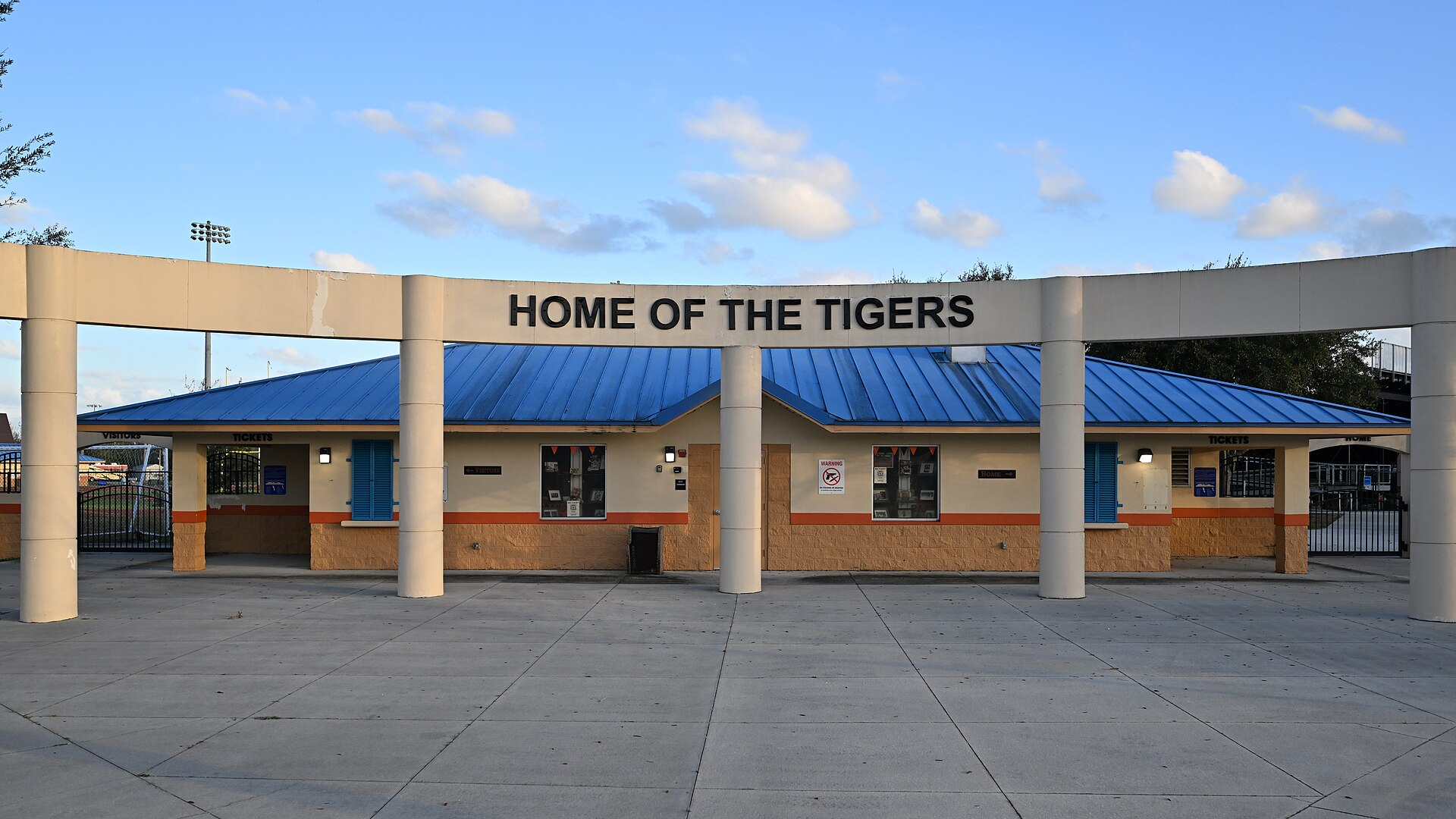
Cocoa High School football has won eight Florida High School Athletic Association state championships, making the Tigers one of the most decorated small-school programs in the state. The first title came in 1939. The dynasty came later: under head coach John Wilkinson and his successors, Cocoa won six state titles between 2008 and 2018, including back-to-back-to-back championships from 2010 through 2012. The program has produced NFL players, Power Five college recruits, and a culture that survived the school’s late-1960s integration, the 1980s small-town economic struggles, and the 2008 recession.

The complete list of Cocoa High FHSAA football state championships, per FHSAA records: 1939, 1962, 2008, 2010, 2011, 2012, 2014, 2018. Eight titles across 79 years. That’s a track record matched by perhaps a dozen Florida public high schools.

The 1939 championship

The first title came in 1939, the third year after Florida formalized its statewide high school athletic championships through the FHSAA. The 1939 Cocoa Tigers played an 11-game season, lost one game, and won the Class B state final.

The 1939 team played under head coach Frank Hubinger. The roster was small, fewer than 30 players. Practice facilities were a single grass field behind the high school. Equipment was donated by Brevard County citrus and merchant families, including significant support from the Travis family and the Porcher estate.

The 1939 championship is documented in Cocoa Tribune coverage (microfilm via Brevard County Library) and in FHSAA institutional records. The exact final-game scores from 1939 are imperfectly preserved, the FHSAA’s pre-1950 records have gaps, but the championship designation is firm.

NARA photograph of Cocoa.
Cocoa High School ran its first state-championship program out of the same downtown built around the FEC depot. The 1962 title belonged to a town of fewer than 12,000 people. National Archives via Wikimedia Commons. Public domain.

The 1962 championship

The second state title came in 1962, under head coach Coppedge. By 1962 Florida high school football had grown into the consolidated multi-class system that exists in modern form. Cocoa High was competing in Class AA (the second-largest class) and won the state championship in a 13-12 final that is still remembered.

The 1962 team played in the segregated school structure (the schools piece). All players were white; Cocoa’s Black athletes were at Monroe High School, which played in the parallel Black-school athletic association that did not compete against white schools. Several historians have noted that Florida’s 1960s state high school football champions came almost entirely from white schools that were not yet competing against the state’s strong Black-school programs; the 1968-69 integration changed competitive dynamics permanently.

The Boyer-McGriff era

Between 1962 and the 2000s, Cocoa High football had ups and downs without state titles. The program was strong through the 1970s and 1980s but couldn’t break through to a championship. The reasons: the school had a modest enrollment (around 1,500), faced larger AA / AAA / AAAA opponents in regional playoffs, and competed in an era when Florida high school football was dominated by Miami-area and Tampa-area programs that drew from larger talent pools.

The 1970s and 1980s era produced a number of college players. The most notable was Bruce Henderson, who played at Florida State in the 1980s, and several others who reached small-college and FCS rosters.

The dynasty era began under head coach John Wilkinson. Wilkinson took over the Cocoa program in 2002 and rebuilt the staff, the offseason program, and the youth-feeder relationships. By 2007 Cocoa was a perennial regional contender. In 2008 the Tigers won the FHSAA Class 4A state championship, the program’s first in 46 years.

That 2008 team featured Daron Roberts (later in the program), Ed Reynolds (who went on to Stanford and the NFL), and several other Power Five college recruits. The depth chart was deeper than Cocoa had ever fielded.

2010-2012: three in a row

The 2010 team won Class 3A. The 2011 team won 4A after a re-classification. The 2012 team won 4A again. Three consecutive state titles is rare in Florida public school football; for a school the size of Cocoa High (then roughly 1,400 students), it was extraordinary.

The 2010-2012 rosters included:

  • Bruce Irvin had already graduated, but his trajectory through Cocoa, Mt. San Antonio College, West Virginia, and the NFL (first-round draft pick of the Seattle Seahawks, 2012; Super Bowl champion 2014) made him the most visible Cocoa High alumnus of the era.
  • Ed Reynolds at Stanford, then the New England Patriots and Philadelphia Eagles.
  • A.J. Bouye, who went undrafted out of Central Florida but became an NFL Pro Bowl cornerback with the Jacksonville Jaguars (Pro Bowl 2017).
  • Several Power Five recruits at SEC, ACC, and Big Ten programs.

The cumulative NFL talent Cocoa produced in roughly 2008-2015 is more than most Florida small towns produce in a generation. Part of this was program-driven (the Wilkinson coaching staff was unusually effective at college placement). Part was the integrated Brevard County athletic pool, the school district’s redistricting brought significant talent from the Black communities west of Cocoa into the Cocoa High roster, and the cultural integration of the program around football performance was, by 2010, complete.

Eastern Florida State College, Cocoa campus.
Many Cocoa High players in the 2010-2018 era went to EFSC for prep or junior-college credits before transferring to Division I programs. The pipeline runs through this campus. Wikimedia Commons. CC.

2014, 2018, and the contemporary program

The 2014 team won the FHSAA Class 4A championship. The 2018 team won again. By 2018 the Wilkinson era had produced six state titles in eleven years, a run essentially without precedent in Florida small-school football.

Wilkinson retired from head coaching after the 2018 season. His successors have maintained the program’s competitiveness; Cocoa remains a perennial playoff team in its FHSAA class, even when not winning the championship. The youth feeder programs in the Cocoa-Rockledge area have continued to produce talent.

The community dimension

Football at Cocoa High has, since the 1960s, been one of the most integrated aspects of the city. Players, coaches, parents, and supporters cross what remain real geographic and economic divisions in Cocoa. Friday-night home games at McLarty Stadium pull crowds from Allendale, from the historically white neighborhoods near Cocoa Village, from Rockledge feeder areas, and from the post-1970s suburban developments to the north and west.

The cultural weight of the program is documented in Florida Today coverage going back to the 1970s. Cocoa-area economic boosters and political figures use football achievements as civic identity. The contrast with Cocoa Beach (a separate city with its own school district arrangement) is sharp, Cocoa Beach is a tourism town with no football tradition; Cocoa is a hometown with one.

Where the records are

FHSAA institutional records document the eight state championships and the championship-game results from 1962 forward. The 1939 championship is documented through Cocoa Tribune coverage and FHSAA historical reconstructions, with some gaps in the game-by-game record. Florida Today has produced extensive long-form coverage of the 2008-2018 dynasty, including a series in 2018 marking the program’s tenth state title (counting all sports) at Cocoa High.

The NFL careers of Cocoa alumni are documented through standard NFL.com biographical records and Pro Football Reference statistics.

What it doesn’t tell you

A state-championship list is a sports record, not a social history. The cultural integration that allowed the 2008-2018 dynasty to happen, Black and white coaches, players, and families collaborating across what had been hard segregation lines fifty years earlier, is a real social-history story that the championship banners alone don’t capture. The Cocoa High football program is, among other things, evidence that a small Florida town can build something that crosses old divisions when there’s a shared goal worth the work. That’s the part most outside coverage misses.

Sources

  • Florida High School Athletic Association (FHSAA), state football championship records, 1937-present.
  • Cocoa Tribune (1908-1966) and Florida Today (1966-present), Cocoa High football coverage (microfilm and digital archives via Brevard County Library and the Florida Today archives).
  • NFL.com biographical and statistical records, Bruce Irvin, Ed Reynolds, A.J. Bouye, and other Cocoa alumni.
  • Pro Football Reference, career statistics for NFL players.
  • Stanford University, West Virginia University, and other college football media guides for Cocoa-product player biographies.
  • Brevard Public Schools, Cocoa High School institutional records and athletic-program documentation.
  • FHSAA championship-game programs and event records.