How Cocoa Was Founded, Named and Incorporated (1882 to 1895)
Fishermen founded Cocoa in 1882 as Indian River City. The post office balked at the long name, a town meeting picked Cocoa in 1884, and the town was incorporated in 1895.
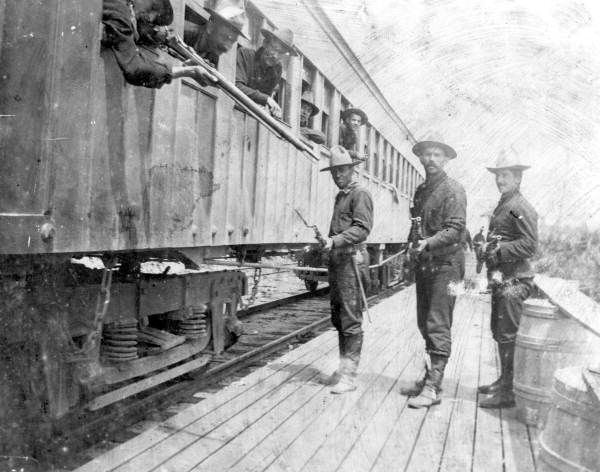
Cocoa started life under another name. According to the Florida Department of State, the town was founded by fishermen in 1882 and called Indian River City. The new post office objected that the name was too long to fit on a postmark. At a town meeting in 1884, Captain R.C. May suggested “Cocoa,” and by 1895 the town was incorporated.
So the short answers: founded 1882, named Cocoa in 1884, incorporated 1895.
Before 1882
Land on this stretch of the river was changing hands before the town had a name. According to the National Park Service’s history of neighboring Rockledge, Gardner Hardee came to Florida with his brother in 1868 and bought several tracts along the Indian River, and the land his brother bought was platted as “Indian River city” and became part of today’s Cocoa. The village was isolated: the National Register nomination for Cocoa’s Aladdin Theater says it could be reached only by steamboat and wagon until the railroad arrived in 1893.
Brevard County itself took shape around those settlers. It began in 1844 as St. Lucie County and was renamed in 1855 for Theodore Washington Brevard, the state comptroller. In 1879 Brevard annexed the southern part of Volusia County, and county voters made Titusville the seat, which it has been ever since (why Titusville got it).
Florida Avenue, the first neighborhood
In Cocoa’s first years, Black and white residents often lived close together. The National Register nomination for Cocoa Junior High School records that in the 1880s two landowners, R.A. Hardee and T.K. Dixon, sold lots in their subdivisions to Black and white buyers alike. The lots sat south of the commercial district along what’s now Florida Avenue, and the chance to own a home drew many Black families. For several years a prosperous neighborhood grew there, with Black-owned businesses and churches.
Then the railroad was laid straight through it (the nomination dates the tracks to 1892). It split the neighborhood and brought the noise and smoke of a working line into the neighborhood. As traffic grew, land along the tracks became worth more as commercial property, and many residents sold and moved elsewhere, and the Black subdivisions of the 1910s and 1920s went up west of downtown. Where they went, and the school they built, is on our page on Cocoa’s Black communities.
Where the name came from
The state’s account: Captain R.C. May proposed “Cocoa” at the 1884 town meeting “because of the area’s association with the cocoa plant.” What isn’t in doubt is the reason a new name was needed at all: Indian River City was too long for the post office.
The railroad and the river
Until 1893 the only ways in were the river and a wagon road. That year the Jacksonville, St. Augustine and Indian River Railway, Flagler’s line, reached Cocoa, and the Aladdin Theater’s nomination credits it with most of the town’s growth in the late 1890s: it brought tourists and settlers, and it carried the area’s fruit and fish to northern markets.
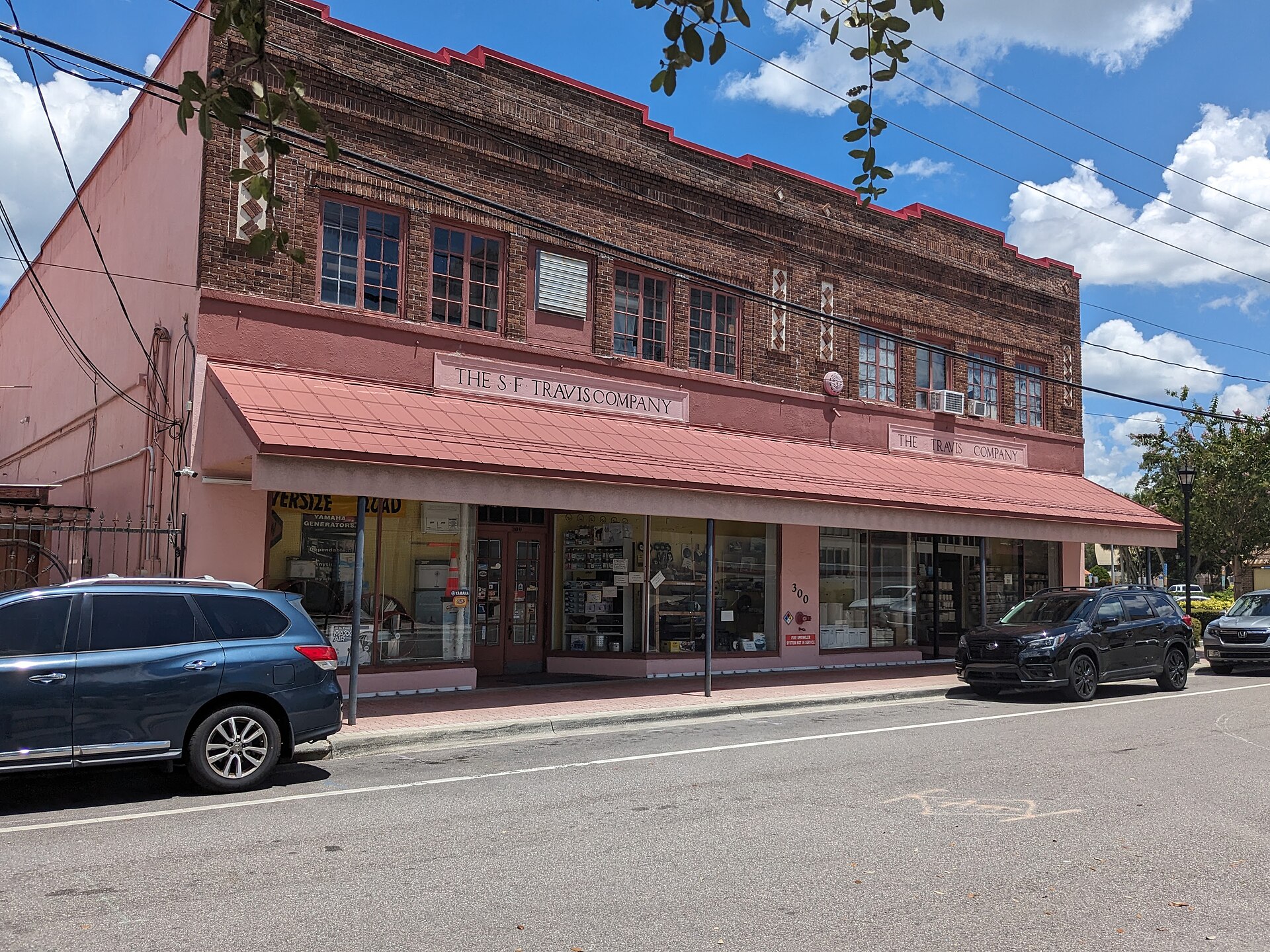
The river kept working, too. S.F. Travis, founded in 1885, is the business that bridges both eras. After a fire in 1890 its store was among the first buildings put back up, in brick, in 1891; the state’s 2019 marker calls it the oldest brick building in Cocoa and the only commercial building from that period still used for its original purpose. Colonel S.F. Travis bought it in 1902, and the company delivered by boat from a dock behind the store, up and down the Indian River, until the dock was removed and the shoreline filled for the Cocoa River Development project in the 1950s. The store has its own page.
Incorporation and growth
Cocoa was incorporated as a town in 1895, the year the Great Freeze delivered its worst blow to Indian River citrus; our freeze page covers what that did to the town.
Growth was slow and then sudden. The census counted 382 people in Cocoa in 1900 and 1,445 in 1920, by which point it had passed Titusville, the county seat. By 1960 it had 12,294.
Cocoa was a late incorporator by local standards. Here’s how the first towns in the county lined up:
| Town | Incorporated | Source |
|---|---|---|
| Titusville | Men voted 58 to 2 for incorporation in November 1886; the city’s own history gives 1887 | National Park Service, Titusville Multiple Property form |
| Rockledge | 1887, under a bill sponsored by H.S. Williams; the first incorporated municipality in the county | National Park Service, Rockledge Multiple Property form |
| Melbourne | December 22, 1888 | National Register nomination, Green Gables |
| Cocoa | 1895 | Florida Department of State |
What’s left of the early town
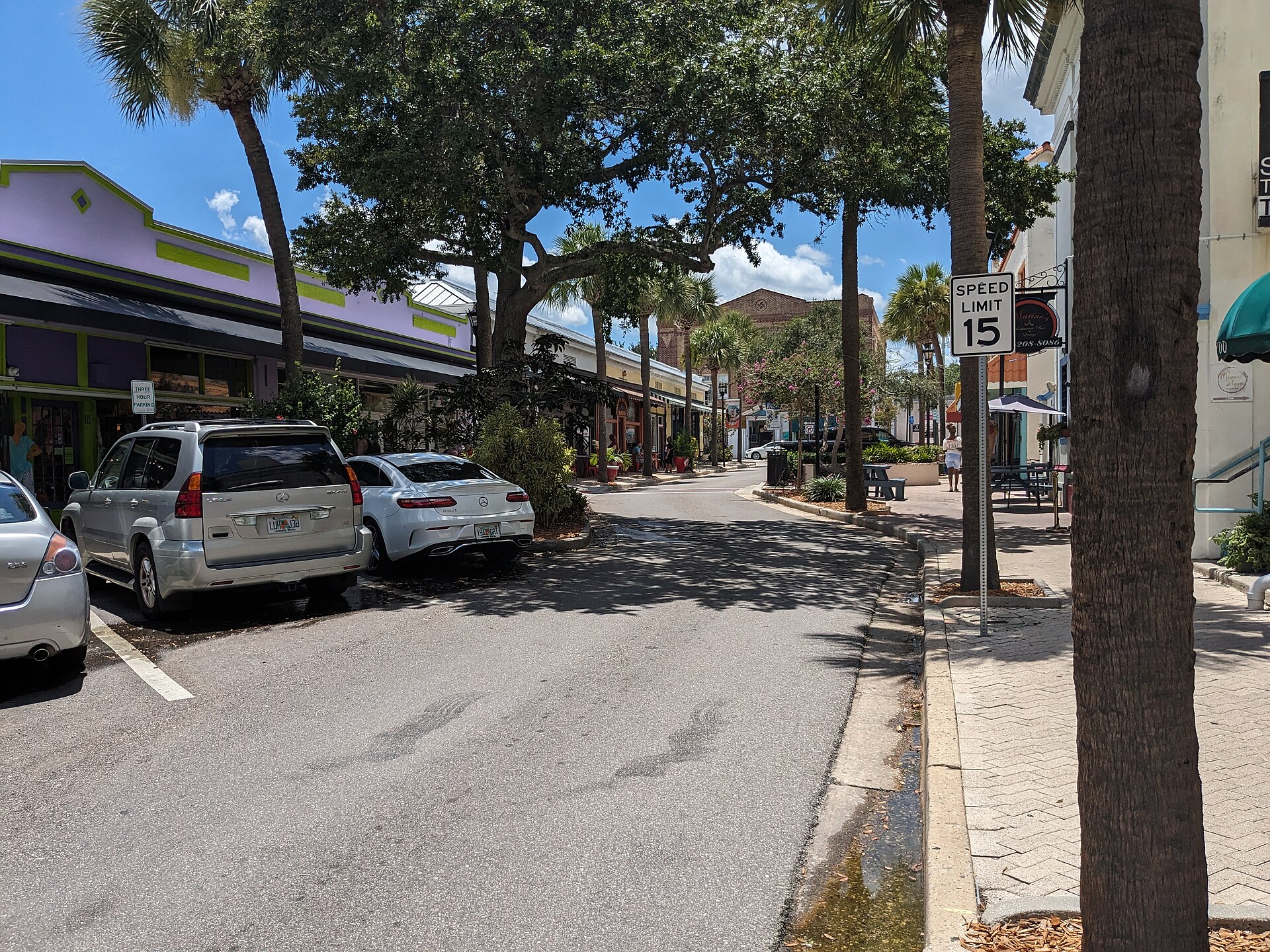
The old downtown along the river is now Cocoa Village, and in 2014 the state named Cocoa’s Main Street program its program of the month, pointing to buildings that have stayed in use for decades. The Cocoa Village page covers the old downtown and its listed buildings, and the Porcher House page covers the house citrus grower Edward Porcher built in 1916.
Further Reading
- Florida: A Short History by Michael Gannon
Sources
- Florida Department of State, Cocoa named Florida Main Street Program of the Month (2014), with a short history of the city
- National Park Service, National Register Multiple Property Documentation Form, Historic and Architectural Resources of Rockledge
- National Park Service, National Register Nomination Form: Aladdin Theater, Cocoa
- U.S. Census Bureau, 1970 Census of Population, Number of Inhabitants: Florida, Tables 6 and 7
- National Park Service, National Register Registration Form: Cocoa Junior High School (2019)
- Florida Department of State, historical marker: The S.F. Travis Company (2019)
- National Park Service, National Register Multiple Property Documentation Form, Titusville Multiple Property Group
- National Park Service, National Register Registration Form: Green Gables, Melbourne (2016)
As an Amazon Associate we earn from qualifying purchases.