Brevard's freedmen and the founding of Black communities near Cocoa, 1865-1920

After emancipation, Black settlers established communities at Mims, Allendale (later part of Cocoa), and near present-day Rockledge. These neighborhoods supplied the citrus-packing labor that built Cocoa's economy. Their churches, schools, and burying grounds still anchor the city's west side.

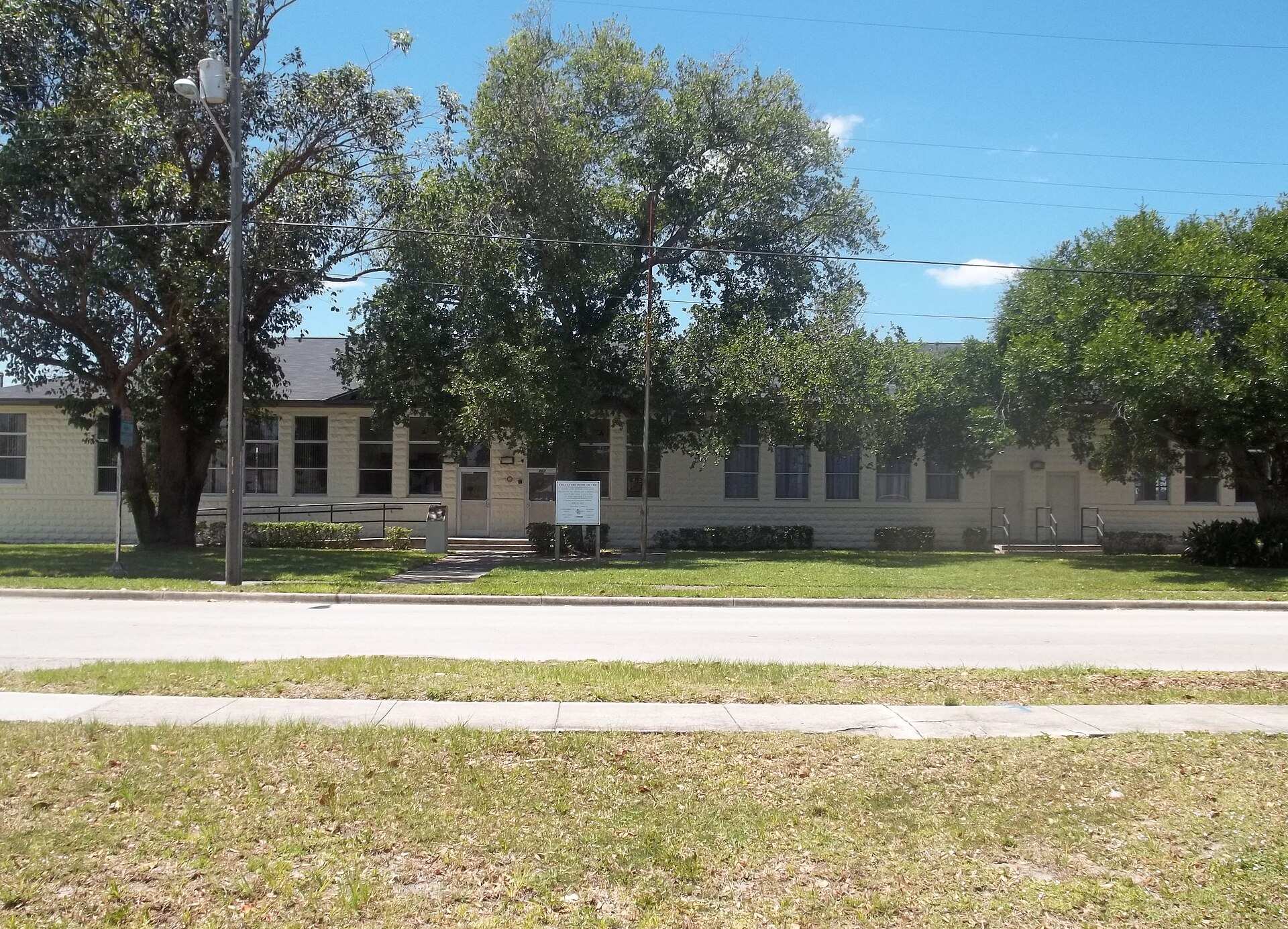
Photograph of Cocoa, Florida from the National Archives, the city whose west-side Black neighborhoods supplied the labor that built the citrus economy.
Cocoa, Florida, NARA photograph. The city's west-side Black neighborhoods, dating from the 1880s, anchored Brevard County's Black population for over a century. National Archives via Wikimedia Commons

Brevard County’s Black communities formed in the post-Reconstruction decades along the Indian River, in three principal clusters that have stayed roughly where they were established. Mims, in north Brevard, was settled in the 1870s by freedmen who acquired land through homesteading and through purchase from white planters who needed labor. Allendale and the Stone Street neighborhood in west Cocoa formed in the 1880s and 1890s as the citrus packing-house economy required steady labor. A smaller Black community west of Rockledge took shape during the same period.

These communities supplied the workforce that ran Cocoa’s packing houses for seventy years (the packing house piece covers the labor demographics), built and staffed their own churches and schools under the segregation regime, and survived urban renewal and integration with most of their geographic footprint intact. Today they are recognizable parts of the city’s west side, anchored by historic Black churches and the legacy of Monroe High School (its own piece).

What Reconstruction left behind

The 1860 census showed Brevard County with a population of fewer than 250 people, almost all white settlers and a small enslaved population on the larger plantations. The county was sparsely settled and the antebellum plantation economy was modest by Florida standards, nothing like the cotton belt of Leon and Madison counties.

Emancipation in 1865 and Reconstruction (formally lasting in Florida from 1868 through 1877) brought a small but consequential influx of Black settlers to Brevard. Some had been enslaved in the county and stayed where their roots were. Others migrated south from harder-pressed central Florida counties (Marion, Alachua) seeking land they could homestead under the 1862 Homestead Act and its post-war amendments, or wage labor that was paid in cash rather than crop-share.

The first documented Black homesteads in Brevard County date to the late 1860s, Land Records of the General Land Office, available via the Bureau of Land Management’s records database, show several Black homestead patents along the western Indian River shore between Titusville and what would become Eau Gallie.

Mims

The Mims community in north Brevard is the oldest of the three Black community clusters and is best-documented because of its role in 20th-century civil rights history. Mims is the home community of Harry T. Moore and Harriette Moore, the NAACP organizers murdered by a Klan bombing of their home on Christmas night 1951. The Moore murder is its own large piece of Florida and national civil rights history (it was the first murder of NAACP officials and one of the events that catalyzed federal civil rights enforcement in the 1950s).

Mims was settled by Black homesteaders and small-landholders in the 1870s, with the population stabilizing through the 1880s as the railroad reached north Brevard and citrus plantations needed labor. By 1900 Mims had a Black-majority population, two Black-led churches, and the beginnings of a school system that would eventually feed into the segregated Brevard County school structure.

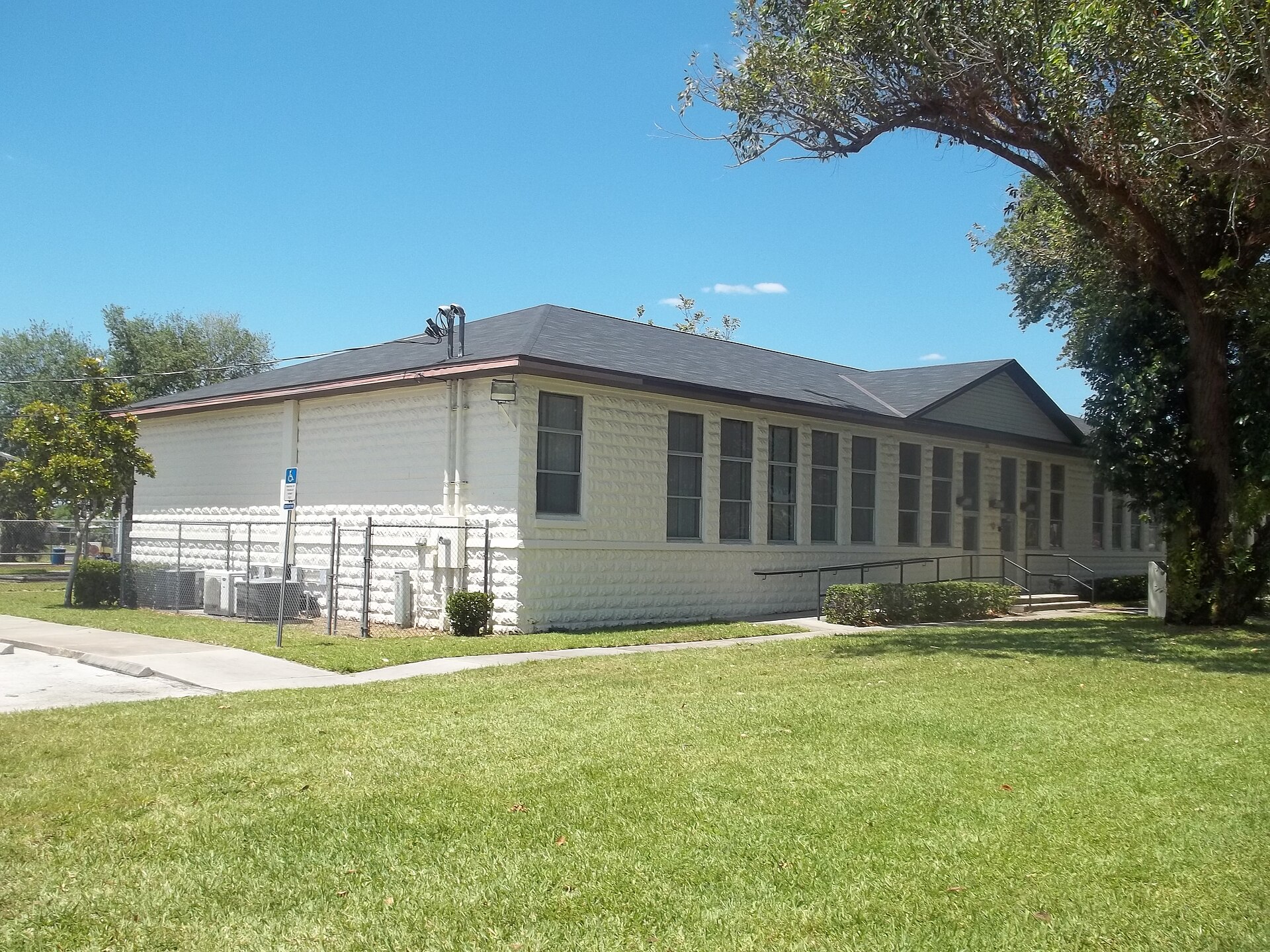
Historic NARA photograph of Cocoa, Florida.
Cocoa as photographed in the federal records. The Black communities at Allendale and Mims sat on the edges of the frame the official record kept. National Archives via Wikimedia Commons. Public domain.

Allendale and the Cocoa west side

Allendale was the historic name for the Black neighborhood west of US-1 in what is now central Cocoa, roughly bounded by King Street on the south, Florida Avenue on the east, and Roosevelt Avenue on the west. The neighborhood’s founding date is approximately 1888-1892, coinciding with the early citrus packing-house era when labor demand drew workers from other Florida counties to Brevard.

Many of Allendale’s founding families had migrated from elsewhere in Florida, Alachua, Marion, Putnam, Volusia. Some had migrated from Georgia and the Carolinas. The pull was wage work in citrus packing, grove maintenance, domestic service in the white parts of Cocoa, and the small commercial sector that an emerging town required.

By 1910 Allendale had:

  • Greater St. Paul AME Church, founded 1893, the principal AME (African Methodist Episcopal) congregation in Cocoa. The current building dates from a 1920s replacement but the congregation is continuous.
  • Mt. Moriah Missionary Baptist Church, founded 1898, the principal Baptist congregation.
  • A community-built school that became the predecessor of Roosevelt-Monroe (its own piece).
  • A small commercial strip on what is now Stone Street, including a barber shop, a grocery, a funeral home, and a fraternal-lodge hall.

The Allendale neighborhood housed the workforce for nearly every aspect of Cocoa’s citrus and tourism economy. Domestic workers for Indian River Drive estates. Packing-house graders, packers, and laborers. Dock workers at the Cocoa wharf. Construction laborers for the 1917 bridge and the Porcher House build. The economic relationship between Allendale and white Cocoa was one of integrated production and segregated daily life, a typical Southern small-town pattern.

The Rockledge Black community

A smaller Black community formed in the late 1890s west of Rockledge proper, on land that several white grove owners parceled and sold to their Black workforce. The community had its own AME and Baptist congregations, its own small school (closed during the post-1949 consolidation that produced Roosevelt-Monroe), and continuous occupancy through the 20th century.

The Rockledge community was always smaller than Allendale, a few hundred residents at peak rather than Allendale’s roughly 2,000 by 1940, but it played a similar economic role for the Rockledge Drive grove and tourism economy.

Land ownership patterns

Federal homestead records and Brevard County deed books show that Black settlers in late 19th-century Brevard typically acquired land in three ways:

Direct homestead. Several Black families took 80-acre or 160-acre homestead claims under the federal Homestead Act, then patented those claims after the required residency and improvement period. Mims has the most documented homestead patents.

Purchase from white planters. Some 1880s and 1890s land transactions in Brevard show white grove owners selling small parcels (1-5 acres) to Black laborers or freedmen on terms that suggest informal financing, the white owner held the mortgage, the Black buyer paid down over years out of wages. Cocoa County records contain several such transactions.

Community-organized purchases. A handful of Allendale-area lots were purchased through church-organized building funds or by mutual aid societies. The acquisition of land for Greater St. Paul AME and Mt. Moriah was funded through congregational contributions over multi-year stretches.

By 1920, Black landownership in Brevard County, while a small fraction of total county acreage, was substantially higher than the Florida state average for Black landownership. This is the foundation of the surviving Black community footprint.

What the Black communities built

Through the segregation era (1890s-1968), the Black communities of Brevard County operated a parallel civic life. Churches functioned as community centers, schools, mutual-aid organizations, and political-organizing bases. Fraternal lodges (Masons, Odd Fellows, Knights of Pythias) supplied small-loan capital and burial insurance. Funeral homes were among the few professional businesses that operated under Black ownership through the segregation period.

The Cocoa-area Black communities also produced the political organizing that would matter in the 20th century, Harry T. Moore’s NAACP work in Mims is the most famous example, but Cocoa had its own NAACP chapter from the 1940s onward, and several Allendale-resident teachers, ministers, and small-business owners were quiet civil-rights organizers through the 1950s and 1960s.

What survives

Allendale’s geographic footprint survives. The neighborhood west of US-1 in central Cocoa is still recognizably the historic Black community, though gentrification pressure and the disappearance of the citrus economy have shifted demographics. Greater St. Paul AME and Mt. Moriah Baptist still operate at their original sites with continuous congregational lineage back to the 1890s.

The Roosevelt-Monroe school site is gone, but a historical marker installed in 2005 names the school. The Monroe High School Alumni Association maintains records and holds reunions.

Several historic Black-community houses survive in the Allendale area. None are on the National Register of Historic Places. None are formally protected. Several have been lost in the past 20 years.

Robert Hayling hosting the December 1968 ACLU Annual Meeting in Florida.
Robert Hayling, the St. Augustine dentist who led much of north Florida's civil-rights organizing, photographed in 1968. The same network reached Brevard's Black freedmen communities. State Library and Archives of Florida via Wikimedia Commons. Public domain.

What the records don’t tell you

The documentary record of late 19th-century Black Brevard is thinner than the white record. White citrus growers left ledger books, business correspondence, and estate inventories. Black homesteaders and laborers left fewer paper records. Federal census enumerations (decennial, 1870 forward), federal homestead patent records, county deed and church records are the principal sources. Oral history collected in the late 20th century supplements but does not replace the documentary thinness.

The result is that several aspects of the Black-community story are recoverable only through specific surviving family records, church archives, and the Florida Memory oral-history collection. A complete history would require fieldwork that no published source has done in full.

Sources

  • U.S. Census, Brevard County records, 1870 through 1940 decennial.
  • Bureau of Land Management, General Land Office Records, federal homestead patents in Brevard County, 1865–1900.
  • Brevard County Clerk of Court, deed books and probate records.
  • Greater St. Paul AME Church and Mt. Moriah Missionary Baptist Church, congregational histories.
  • NAACP archives, Library of Congress, Florida State Conference records, including the Brevard County chapter.
  • Florida Memory Project, oral history collection, Brevard County Black community recordings.
  • The Florida Star and The Florida Sentinel, Black-press coverage of Brevard County (microfilm via University of South Florida).
  • Tameka Bradley Hobbs, Democracy Abroad, Lynching at Home: Racial Violence in Florida (University Press of Florida, 2015), historical context.
  • Ben Green, Before His Time: The Untold Story of Harry T. Moore, America’s First Civil Rights Martyr (1999).
  • Brevard County Historical Commission archives.