The Aladdin Theatre, 1924: Cocoa Village's surviving silent-era movie palace
Opened in November 1924 by Edwin and Jenny Hoffman, the Aladdin Theatre on Brevard Avenue is one of the oldest continuously-operating movie houses in Florida. It's on the National Register and still shows films.

The Aladdin Theatre at 80 South Brevard Avenue in Cocoa Village opened on November 6, 1924, with a silent film and an organist named Cleo Burritt accompanying. Almost 102 years later it’s still operating, making it one of the oldest continuously-functioning movie theaters in Florida and one of about a dozen surviving silent-era movie houses still in commercial use anywhere in the southeastern United States. It was added to the National Register of Historic Places in 1996.
The theater is also a complete document of how a small-town Florida cinema adapted across the silent-to-sound transition, the Great Depression, the post-war second wave of single-screen houses, the multiplex era that killed most of them, and the indie/repertory revival that has kept the surviving ones alive.
The opening
Construction began in 1923 on a lot Edwin Hoffman had purchased from the Magruder family. Hoffman, originally from Detroit, had come to Cocoa around 1920 with his wife Jenny and bought into local citrus before deciding the town needed a real movie house. The existing entertainment options in Cocoa in 1923 were the Cocoa Auditorium (a multi-purpose municipal building, its own piece) and a small tent-show cinema that operated seasonally.
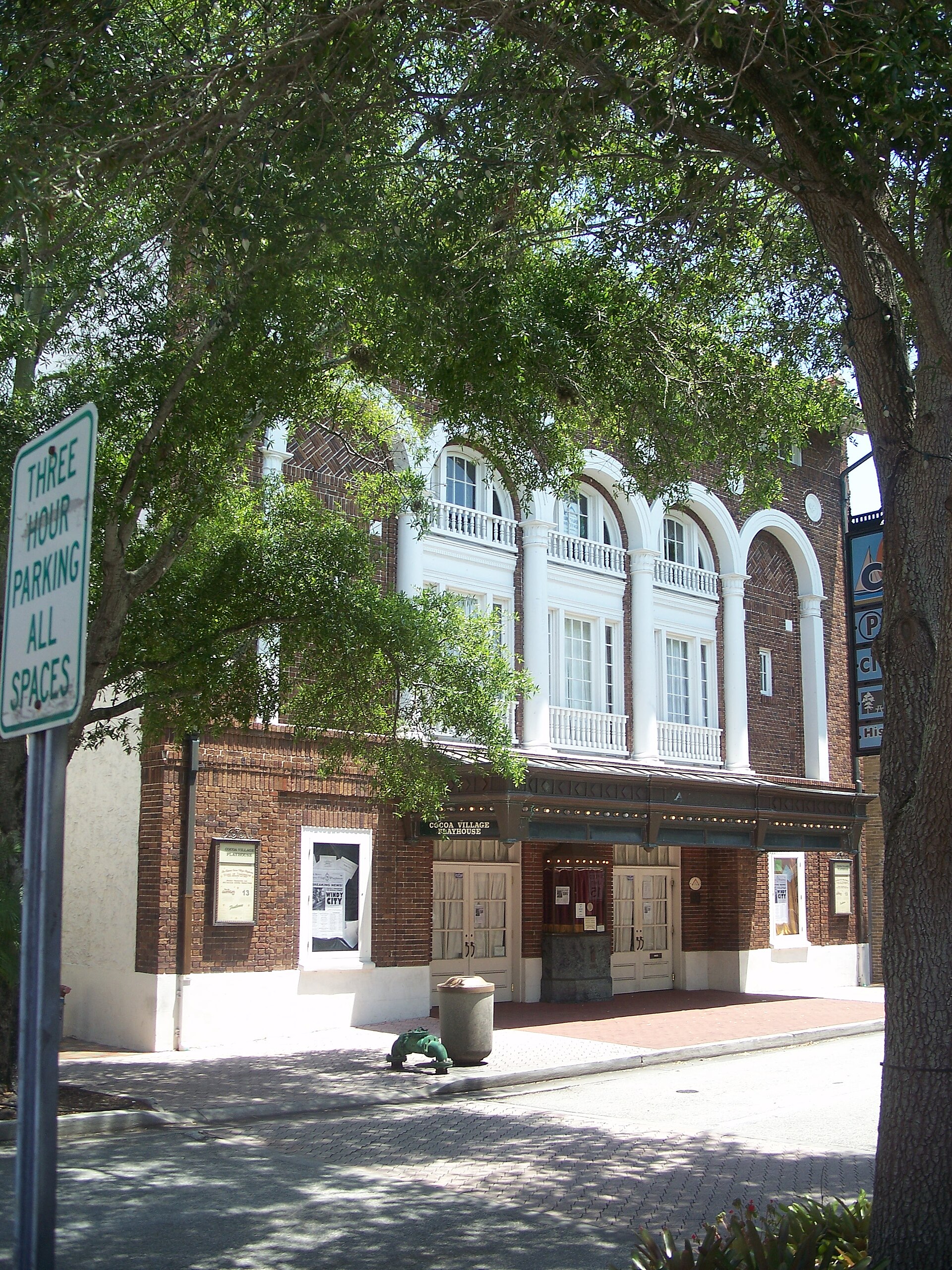
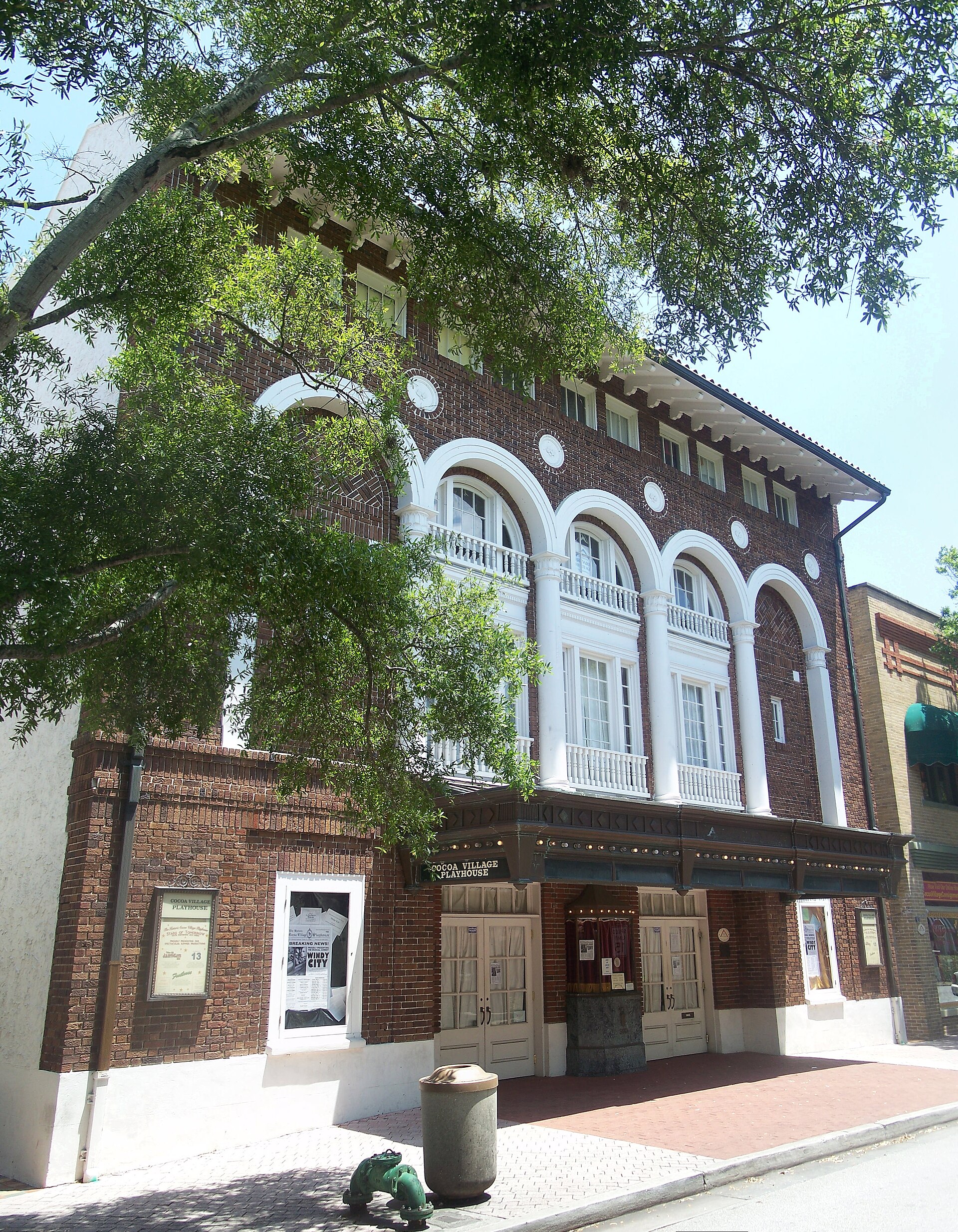
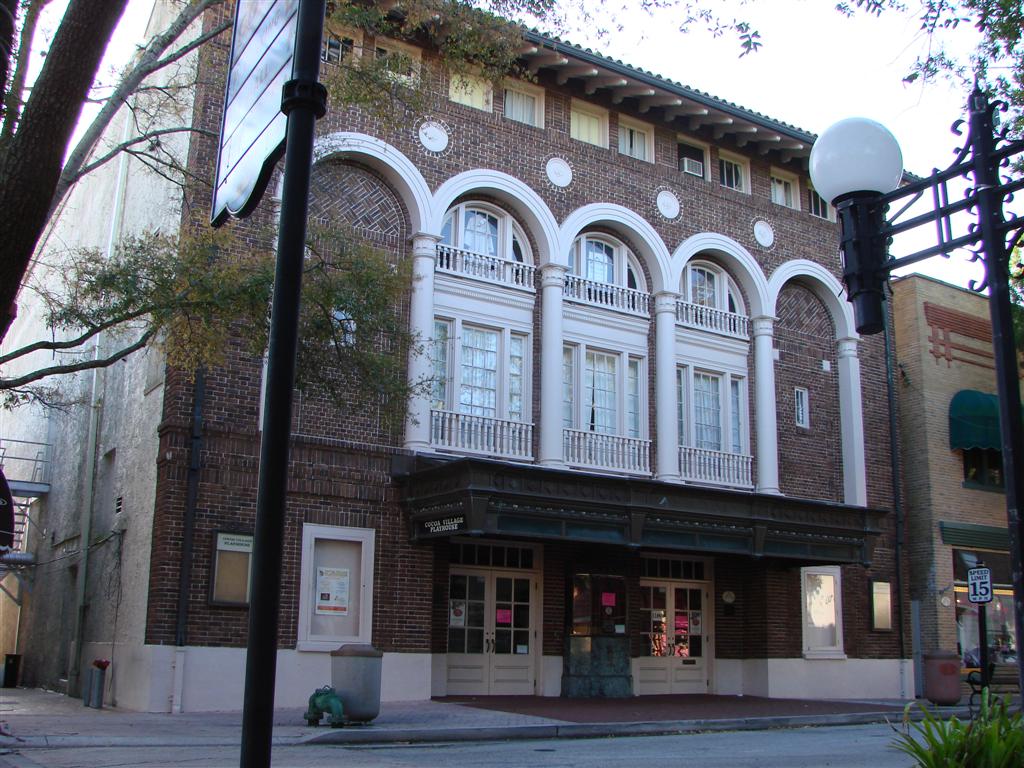
The Hoffman building used the Moorish Revival style that was briefly fashionable for movie palaces in the early 1920s, pointed arches, decorative tilework, ornate plasterwork inside the auditorium. The “Aladdin” name and the Moorish detailing were of a piece with the era’s American fascination with Arabian Nights mythology, fueled in part by the popularity of Rudolph Valentino films like The Sheik (1921).
The opening-night film was The Sea Hawk, a Frank Lloyd-directed pirate adventure released earlier in 1924. The auditorium seated approximately 600, with main floor and balcony. Cleo Burritt accompanied the silent film on a pipe organ installed in the orchestra pit. Burritt continued as house organist for several years.
Admission in 1924: 15 cents matinee, 25 cents evening, 35 cents for the balcony. The opening-night advertising in the Cocoa Tribune called the theater “Brevard County’s finest amusement palace,” which was accurate by virtue of being the only one.

The transition to sound
The Aladdin installed Western Electric sound equipment in 1929, two years after Warner Brothers’ The Jazz Singer established sound as the new standard. The Hoffmans converted relatively quickly because Cocoa was big enough to support it and because the citrus economy was still strong in 1929 (the 1929 fruit fly quarantine hit Florida growers but the Cocoa packing houses survived). Many smaller Florida theaters didn’t convert until 1931 or 1932, and a substantial number closed rather than invest in the equipment.
The first sound film shown at the Aladdin was In Old Arizona (1929), the first sound Western and the first major sound film shot largely outdoors. Cleo Burritt’s job ended with the conversion; the pipe organ was retained as a curiosity but not used commercially after 1930.
Through the Depression and World War II
The Aladdin stayed open through the entire Depression. Brevard County’s citrus economy provided a base of paying customers that pure-tourist economies in southern Florida couldn’t match. The Hoffmans dropped admission prices in 1932 (to 10 cents matinee, 20 cents evening) and added a “dish night” promotion in which patrons received free pieces of china, a common Depression-era theater gimmick that still survives in collector culture (Aladdin-promotional china pieces occasionally appear on Florida estate sales).
During World War II the theater showed newsreels heavily, hosted war-bond drives, and reduced runs of features to fit additional screenings. The Banana River Naval Air Station (later Patrick Air Force Base) brought a wave of military personnel to Cocoa starting in 1942, and the Aladdin’s evening shows were often heavily attended by uniformed servicemen.
The post-war single-screen era
From 1945 through roughly 1972, the Aladdin operated as the primary first-run movie theater for mainland Cocoa. The Cocoa Drive-In Theatre opened on US-1 in 1949 and provided summer-season competition; the Cocoa Plaza Cinema (a small two-screen operation in a shopping center) opened in 1967 and took some weekend business.
The Hoffman family sold the Aladdin in 1962 to a Brevard-based theater chain (Florida State Theatres, eventually absorbed into ABC Theatres). The new corporate ownership ran the Aladdin profitably through the 1960s.
The multiplex era and the near-death
In 1972 the new Brevard Mall (later Merritt Square Mall) opened with a four-screen multiplex. By 1980, Cocoa had multiplex theaters in Rockledge (Cinema 8) and on the barrier island (Cocoa Beach Cinema). The Aladdin’s first-run business collapsed.
ABC Theatres closed the Aladdin in 1985 and sold the building. It sat largely vacant from 1985 through 1991, used occasionally for community theater productions and as storage. The exterior deteriorated. The Moorish plasterwork began to fail. There was serious discussion in 1988 of demolishing the building and selling the lot for parking, which was the fate of several other Florida historic theaters in the same period.
What saved it: a local preservation campaign coordinated by Cocoa Village Mainstreet (the organization driving the Cocoa Village 1980s revival) and the support of the City of Cocoa, which moved to acquire the building through grant programs. The 1996 National Register listing (NRHP reference 96000553) helped lock in protection.

The current era
A new operator reopened the Aladdin in the early 1990s as a mixed-use venue, second-run films, community theater productions, occasional concerts. The Moorish plasterwork was restored in stages through the 2000s. The original 1924 marquee was replaced with a period-correct replica in 2005.
As of May 2026 the Aladdin operates as the Historic Cocoa Village Playhouse, primarily hosting live theater productions plus occasional film screenings. The ownership and operations have changed multiple times across the past 30 years, but the building has stayed open and the structural integrity has been maintained.
What’s worth seeing
The exterior on Brevard Avenue is the most photographed historic facade in Cocoa Village. Moorish-pointed arches over the entrance, decorative tile work, the replica marquee.
Inside, the original 1924 auditorium plasterwork survives in significant portions. The decorative ceiling, the proscenium arch detailing, and some of the side-wall ornamentation are original.
The 1924 pipe organ does not survive; it was removed at some point in the 1950s and its disposition is undocumented. This is a loss, given that the Aladdin’s pipe organ would have been one of the better-preserved silent-era theater organs in Florida if it had stayed in place.
Sources
- National Register of Historic Places, registration form for the Aladdin Theatre, NRHP reference 96000553, listed May 30, 1996. Available via National Park Service NRHP database.
- Cocoa Tribune, November 1924 opening-week coverage and editorials (microfilm via Brevard County Library System).
- Florida Master Site File, Florida Division of Historical Resources, Aladdin Theatre record.
- Cinema Treasures database, Aladdin Theatre Cocoa entry.
- City of Cocoa historic resources inventory.
- Cocoa Village Mainstreet preservation campaign records, 1988–1996.
- U.S. Census, 1920 and 1930, Hoffman family records, Brevard County.
- Florida State Theatres / ABC Theatres corporate records on Brevard County operations.