Cocoa in the Florida land boom, 1917 to 1930
Cocoa grew from about 550 people in 1912 to about 1,800 by 1925, built its brick downtown and the Aladdin Theater, and kept growing through the 1926 bust on citrus and tourism. What the National Register records and the census show.
The Florida land boom of the early 1920s reached Cocoa as it reached every town on the coast. According to the Aladdin Theater’s National Register nomination, which gives the most detailed short history of Cocoa in these years, the town had about 550 people in 1912, about 1,200 by 1918 and about 1,800 by 1925. The census counted 1,445 in 1920 and 2,164 in 1930.
Why the boom came
The National Park Service’s history of neighboring Rockledge sets the scene. Better wages, a shorter work week, vacation time, paved highways and affordable cars gave the northern middle class a mobility it had never had, and brochures and magazine pieces promising Florida fortunes did the rest. By early 1925 the Jacksonville Chamber of Commerce was counting 20 to 25 trains a day into the city, and 150,000 automobiles through it at the height of the winter season. The previous fall Florida had approved a constitutional amendment prohibiting a state income or inheritance tax, which the nomination calls an open invitation to wealthy investors.
The brick downtown
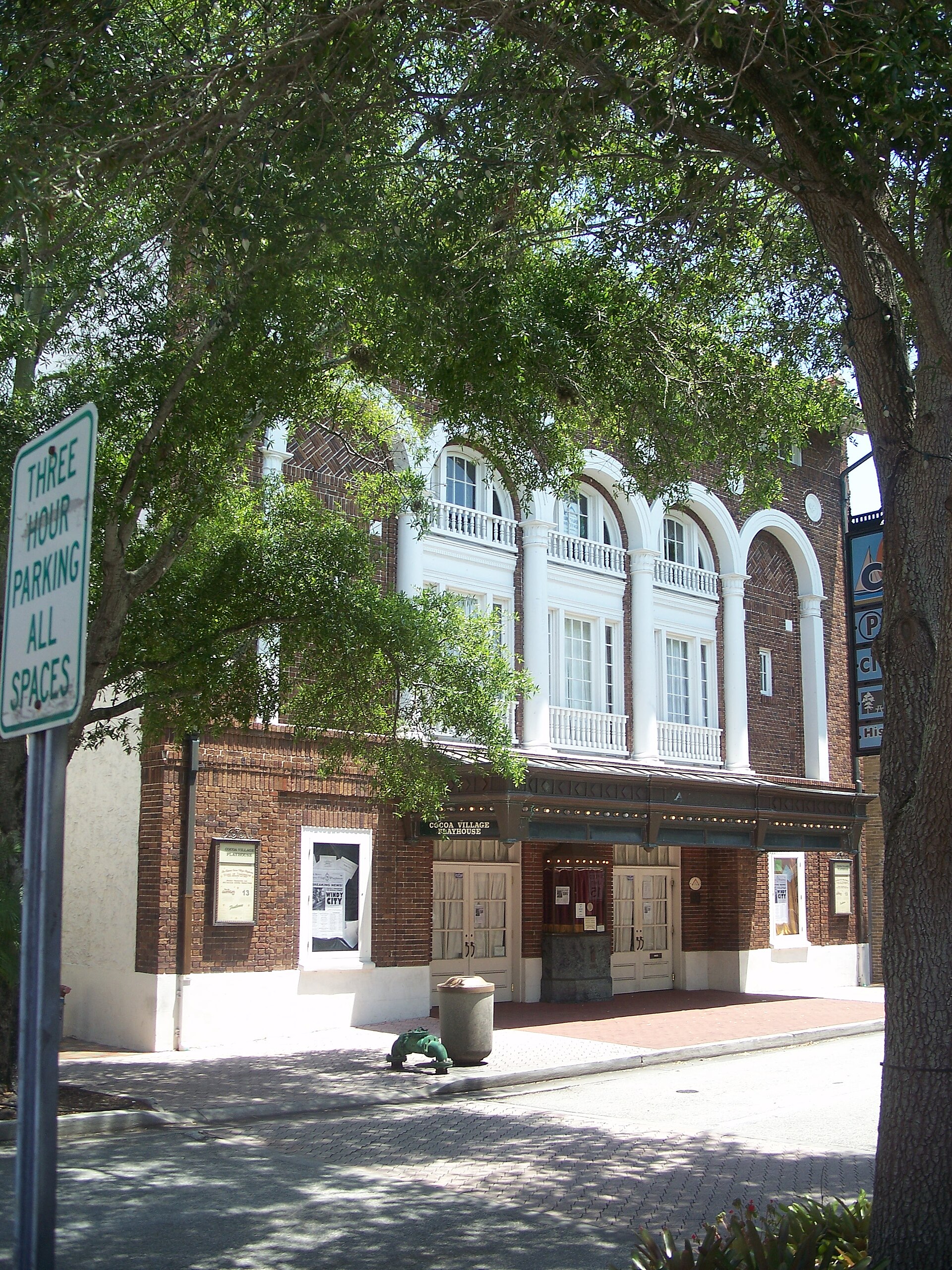
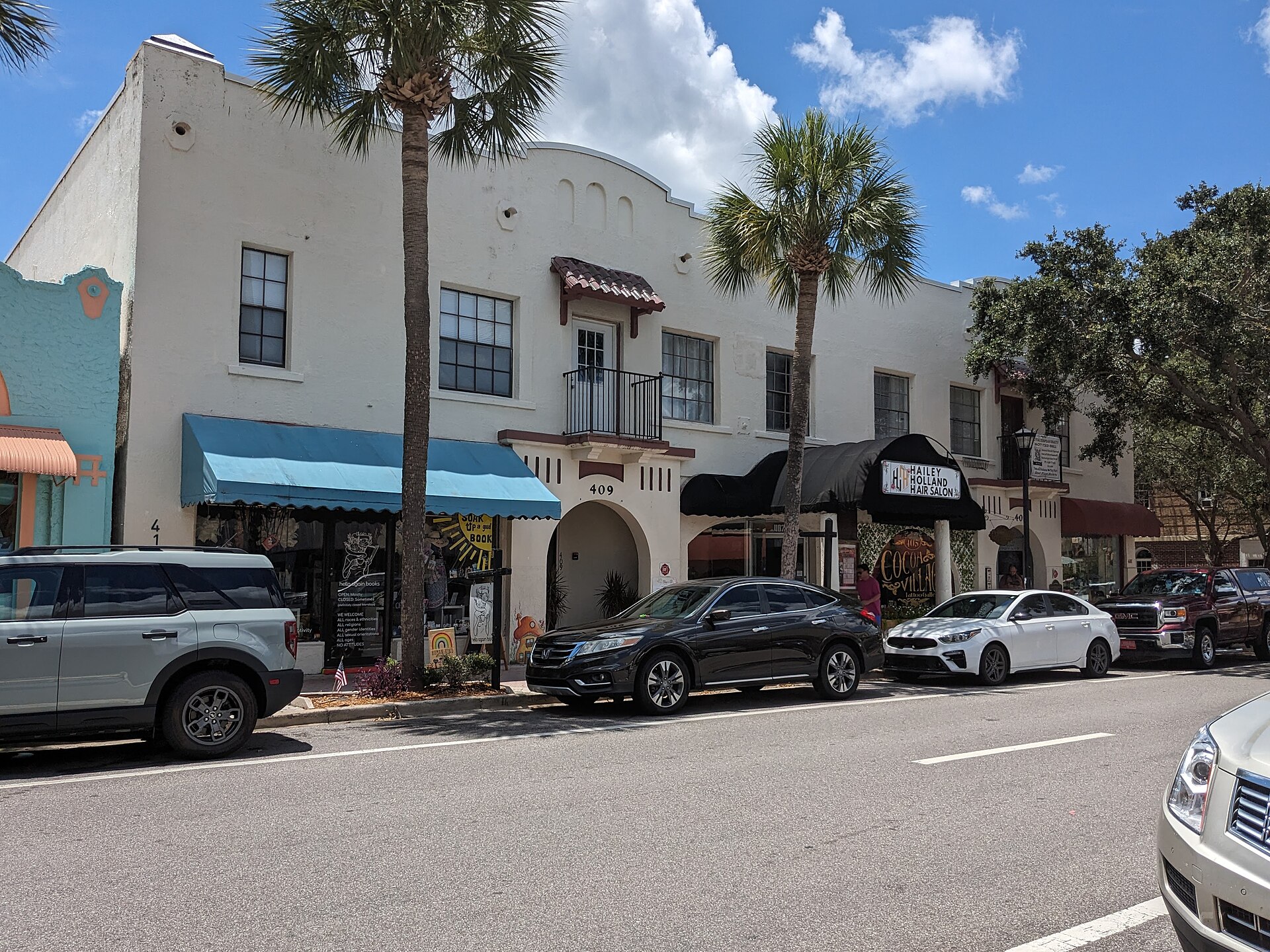
The boom rebuilt the center of town. The nomination says Cocoa spread beyond its old limits and new construction replaced many older downtown buildings. It names the landmarks of 1917 to 1927: the Sanders Block, built in 1917 for the businessman J. M. Sanders; the Masonic Temple of 1919, the most modern building in town when it went up; and, “perhaps the most significant landmark in the city erected during the Boom,” the Aladdin Theater of 1924, designed by the Atlanta architect P. Thornton Marye and built for $80,000. The theater seated 800 in a town of about 2,000.
It replaced the Victor, a converted warehouse with a stage and benches that closed on July 14, 1924, after eleven years. The Aladdin opened on August 18, and the Cocoa Tribune reported the largest crowd ever to attend such an event in town. Tickets were 35 cents for adults and 20 cents for children. Four days before the opening, a man from the Brevard County Bank and Trust Company told the Tribune the building was “a monument to the community loyalty and spirit of the builders.” It was boom talk, in print. The theater’s full story is on our Aladdin page.
The roads helped. The nomination credits the state’s highway program, and especially the Dixie Highway, with opening much of the east coast to tourists and settlers by the end of the 1920s.
Next door in Rockledge
Rockledge, Cocoa’s neighbor to the south, boomed harder and left a better paper trail. Its population went from about 450 in 1920 to more than 600 by 1925, and between 1921 and 1926 new subdivisions filled in so fast that the boundary lines between the two towns “were quickly obscured,” the nomination says. The town council adopted Rockledge’s first building ordinance in April 1921, with fire limits and permits, and spent the first half of the decade on paving, street lights, seawalls along the river, a telephone franchise for Southern Bell and a pump truck for a permanent fire department.
1925 was the peak. Rockledge reincorporated as a city that April, every room in town was booked, and the overflow slept in tent cottages at a tourist camp on the west edge of town. The old wooden Indian River Hotel had already given way to a Mediterranean Revival building that cost $300,000 in 1923. The Dixie Highway reached Rockledge by 1926, and with it trucking, which the nomination calls perhaps the most significant change the road brought: a new way to haul fruit out of the Indian River country. How the two towns grew into each other is on our Cocoa and Rockledge page.
A town that kept its footing
Cocoa’s economy, the nomination says, was by 1925 “well established”: tourism and agriculture, mainly citrus growing, packing and processing, with the citrus trade supporting rail shipping, trucking, banking and retail. When the Florida boom collapsed in 1926, Cocoa kept growing anyway, reaching about 2,200 people by 1930 by the nomination’s count.
The bust left marks all the same. Next door in Rockledge, the National Park Service’s history of the town records signs of collapse in 1926, and calls the September 1926 hurricane, which came ashore at Miami, the boom’s “final blow” statewide. In Cocoa, the College Park subdivision, platted west of downtown in the mid-1920s for Black buyers, was laid out “just as the Florida Land Boom came to a halt,” according to the Cocoa Junior High School nomination, and Sanborn maps from 1930 show many of its lots still empty.
The Aladdin’s own books tell the same story in miniature. In April 1925 the owners leased it for ten years to the Southern Enterprises Corporation, which ran into management trouble, and control passed to the new Publix Theatres Corporation. In 1930 the theater added sound newsreels to try to lift attendance. In April 1936 one owner, Herbert Cogswell, sued to dissolve his partnership with Fred Bryan, and on September 16 they sold the theater to United Theater, Inc., better known as the Sparks group. The nomination says that sale coincided with the end of Cocoa’s most vigorous period of development before 1945.
After 1930, the Aladdin nomination says, little was built in Cocoa until after World War II.
The next boom
When growth came back, it came from the Cape. A 1966 Florida State University study for NASA records that by 1955 the missile test center’s pull reached in every direction, and that Orlando, 50 miles away, was describing it as “creating a boom comparable to that of 1925.” Cocoa’s population went from 4,245 in 1950 to 12,294 in 1960.
Further Reading
- A Land Remembered by Patrick D. Smith
- Florida: A Short History by Michael Gannon
Sources
- National Park Service, National Register Registration Form: Aladdin Theater, Cocoa (listed 1991)
- National Park Service, National Register Registration Form: Cocoa Junior High School (2019)
- National Park Service, Multiple Property Documentation Form, Historic and Architectural Resources of Rockledge
- U.S. Census Bureau, 1970 Census of Population, Number of Inhabitants: Florida, Table 7
- Annie Mary Hartsfield, Mary Alice Griffin and Charles M. Grigg, eds., Summary Report: NASA Impact on Brevard County (Florida State University Institute for Social Research, 1966)
As an Amazon Associate we earn from qualifying purchases.